Plenty of communities borrow a famous name purely for the sound of it. This one didn't have to. Bing Crosby owned an adobe home in Rancho Santa Fe starting in the 1930s, a period when he was also raising horses on the property, lending his name and effort to getting the Del Mar Racetrack established, and running a golf tournament in 1937 that would, decades later, turn into the AT&T Pebble Beach Pro-Am fans know now. When Starwood Development laid out a 722-acre golf community here in the early 2000s and reached for his name, they weren't reaching for marketing polish — they were pointing at something that had actually happened on this land.
The move wasn't random. Crosby and his wife Dixie had grown uneasy raising their children in Los Angeles following the Lindbergh baby kidnapping, and Rancho Santa Fe's distance and privacy offered exactly the kind of buffer they were after. Crosby settled into one of the area's original adobe homes, took up raising horses, and became genuinely embedded in the community rather than just visiting it — a resident, not a celebrity passing through. His golf tournament, the original "clambake," debuted at the Rancho Santa Fe Golf Club in 1937 and eventually relocated and evolved into the tournament golf fans know today at Pebble Beach. None of that history is incidental to this community; it's the entire reason the name fits.
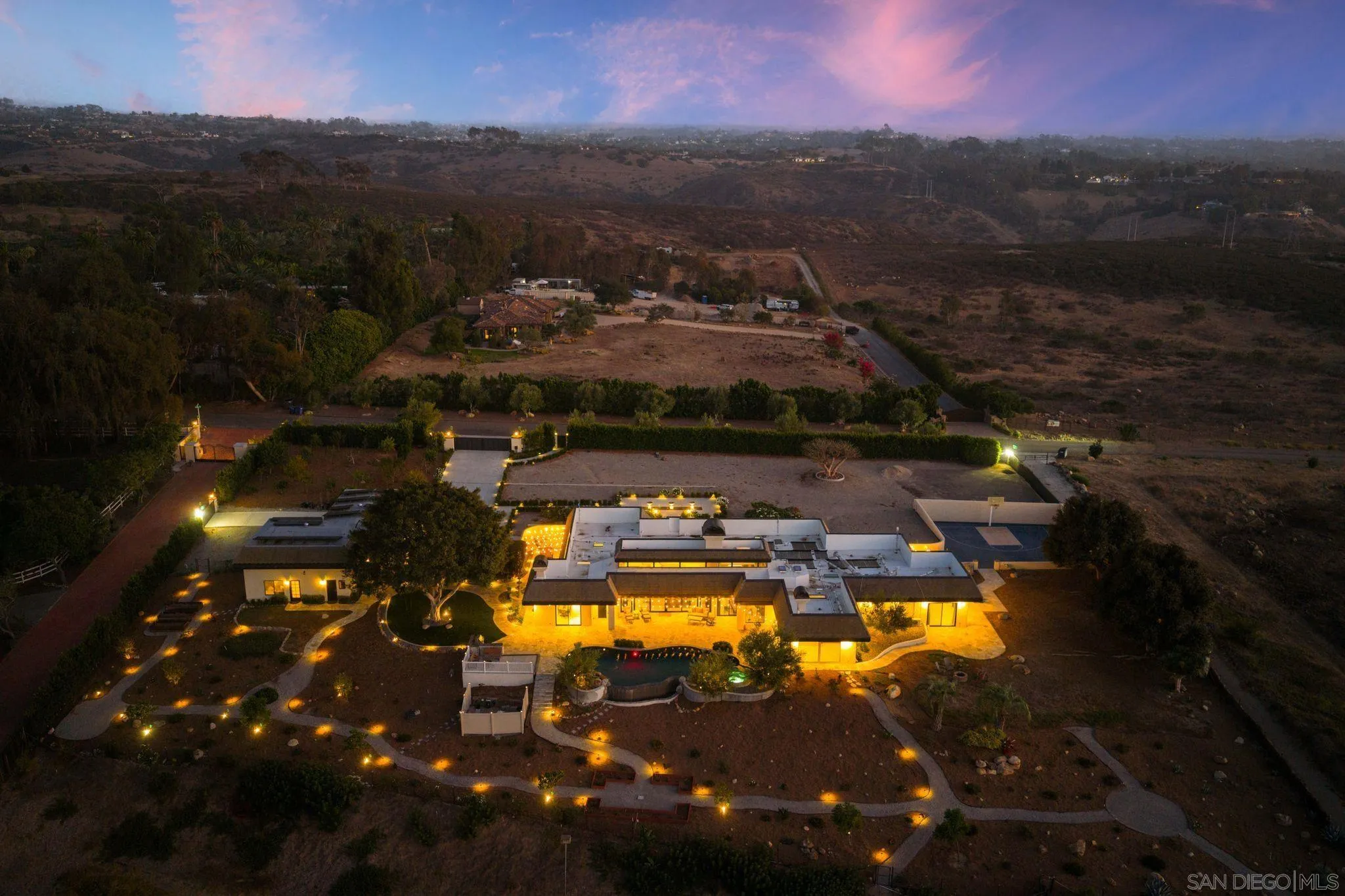
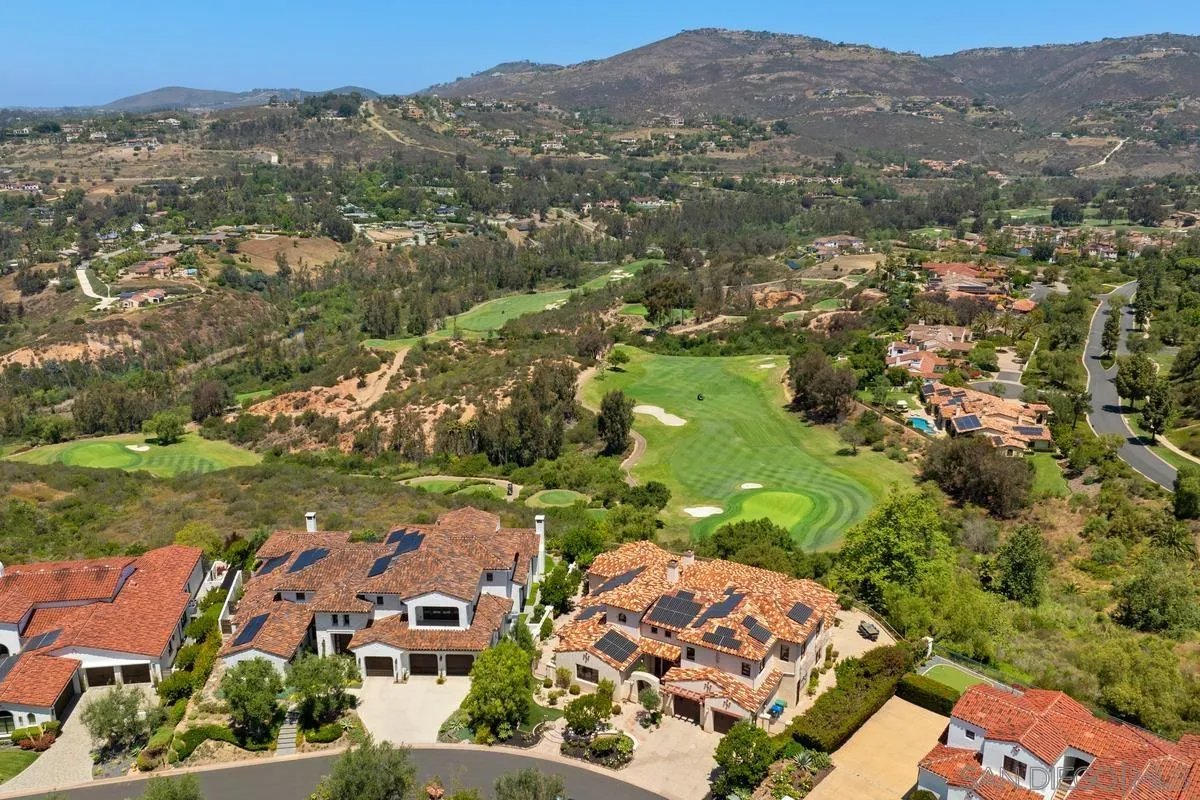
Getting into The Crosby involves a small piece of theater before the guard gate even comes into view: a 340-foot span crosses the San Dieguito River right at the entrance, lampposts along its length echoing an early-California look, the whole effect leaning toward genuine drama rather than anything overdone. Once past the round-the-clock guard station, the terrain does most of the introducing on its own — real elevation change, canyons deep enough to notice, and a lake park that draws a steady crowd of its own once the evening light turns warm. The 722-acre footprint holds 70 villas, 281 semi-custom homes, and 70 custom homesites, arranged around an 18-hole course, with more than 190 acres set aside permanently rather than folded into additional fairway — sage scrub, riparian growth, stands of oak and eucalyptus, and genuine wetland all still doing what they'd do without a golf community around them, rather than getting scraped down to something more photogenic.
Fred Couples is genuinely picky about which courses carry his name, and the fact that he agreed to this one says something on its own — The Crosby represents one of his earliest big design ventures, developed alongside architect Brian Curley and the Schmidt-Curley firm, and it welcomed its first players in 2001. The scorecard shifts a bit depending on tee setup, landing at either par 70 or par 72, but the back tees always stretch to 6,804 yards with a slope rating of 140 — numbers that promise a genuinely tough day for anyone playing at full length. Elevation does most of the storytelling here. Stand on the fifth tee, a 423-yard par 4 and the highest point on the entire course, and the fairway waiting below curls rightward from nearly 200 feet up — genuinely dramatic before a club ever gets swung. Most of the short holes lean into that same drop: the 11th sends a shot toward a small target squeezed between red rock outcroppings and what's left of an old mine shaft, and the 13th covers 240 yards while playing from a tee roughly 100 feet above the green itself. The 8th stands out precisely because it doesn't follow that pattern — a flat-to-uphill approach into a three-level green ringed by natural rock formations that function almost like stadium seating around the hole. Several holes open up views across the San Dieguito River Valley and the hills beyond, with the ocean occasionally visible in the distance when the air is clear, and consistent Bermuda turf keeps both fairways and greens playing reliably well year-round. Carts come equipped with GPS, which turns out to be genuinely useful given how easy it is to lose your bearings across terrain this dramatic.
Somewhere between 33,000 and 35,000 square feet of clubhouse anchors the property, and the Bing references keep showing up by design once you're inside — the Going My Way Grille wears the connection most obviously in its name, joined by a formal main dining room and separate private dining rooms for anything more occasion-driven, a pair of more casual options in the Clubhouse Grille and Poolside Grille for everyday meals, plus a bar and lounge for anyone not there to eat at all. The overall dining program spans that full range deliberately — nobody has to leave the property whether the goal is a quick lunch or a proper celebration dinner.
Past the clubhouse, the Swim and Athletic Club runs around a saltwater pool built to junior Olympic dimensions and kept at 81 degrees no matter the time of year, with a marked lane section set aside for anyone actually swimming laps rather than lounging. The attached fitness center covers up-to-date equipment, on-staff personal trainers, and a rotating group class schedule, backed by spa services for members more interested in recovery than another workout. Racquet sports have their own dedicated space too, in the Tennis Garden: three lit tennis courts, four lit pickleball courts, and USPTA-certified coaching available one-on-one or in groups, all positioned close enough to the spa courtyard that a match tends to turn into a longer hangout afterward, with organized leagues and tournaments filling out the calendar year-round. Buyers choosing a membership level have real options: Full Golf unlocks the entire club, a Sports tier covers the fitness center, pool, spa, and both racquet sports plus dining and social access while leaving golf out entirely, Social membership pares things down to dining and events for anyone who just wants the community connection, and a separate Residents membership exists specifically for homeowners.
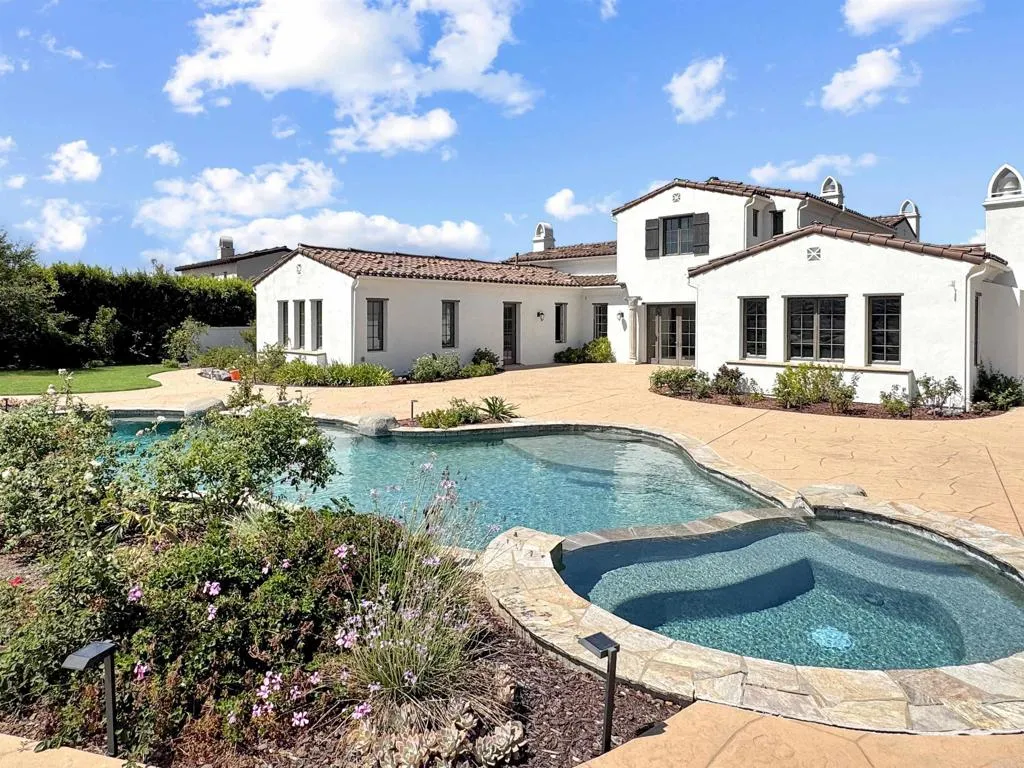
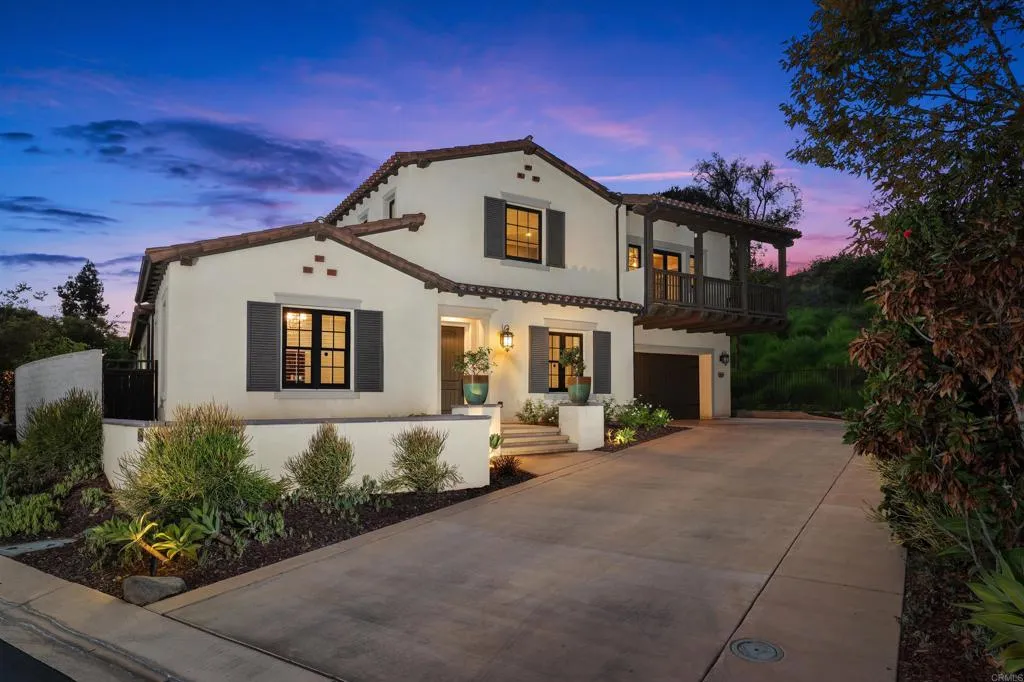
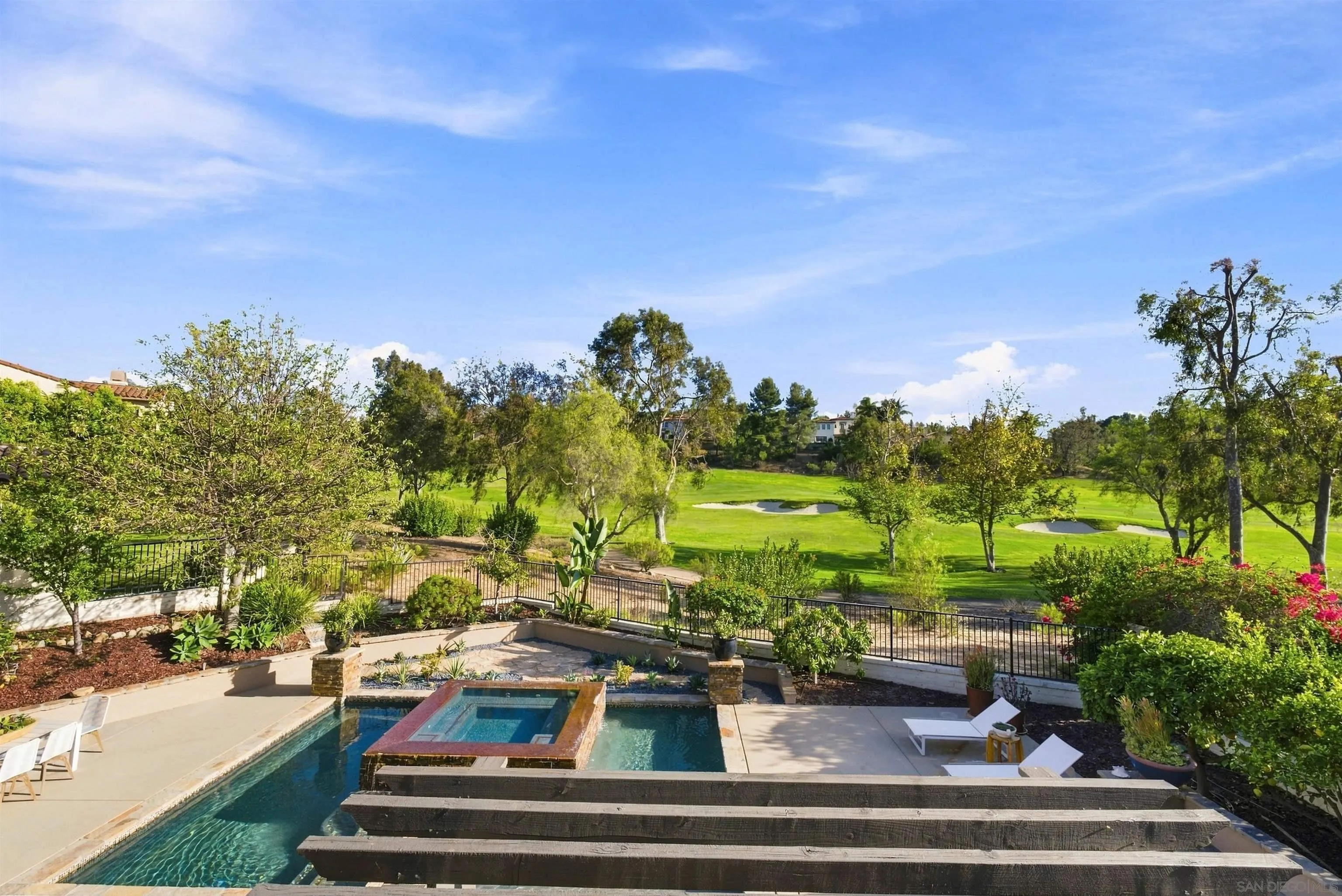
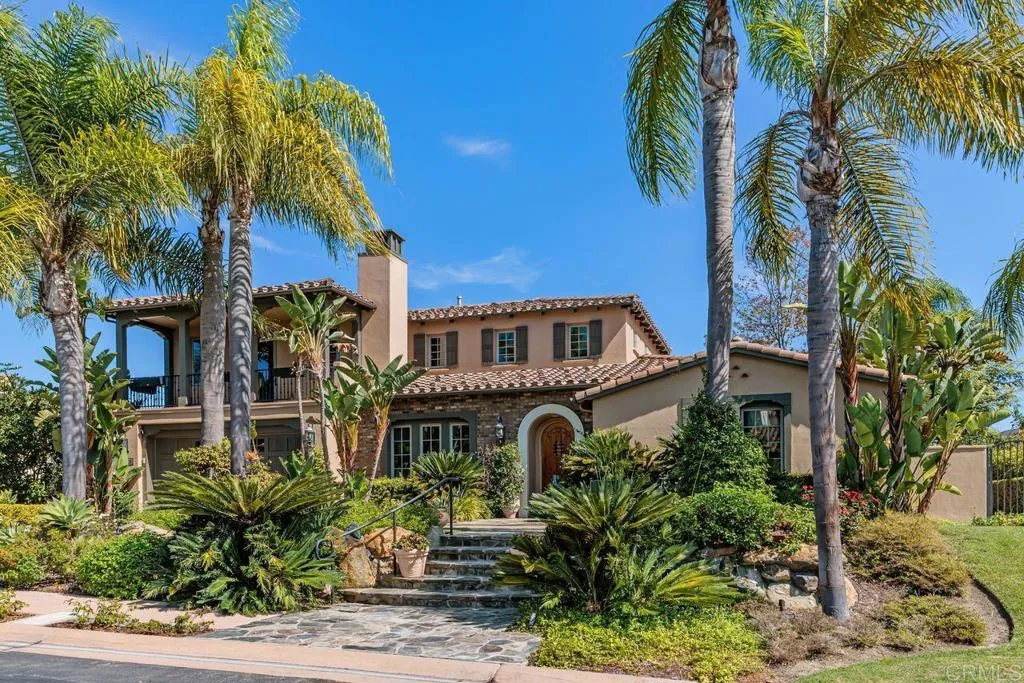
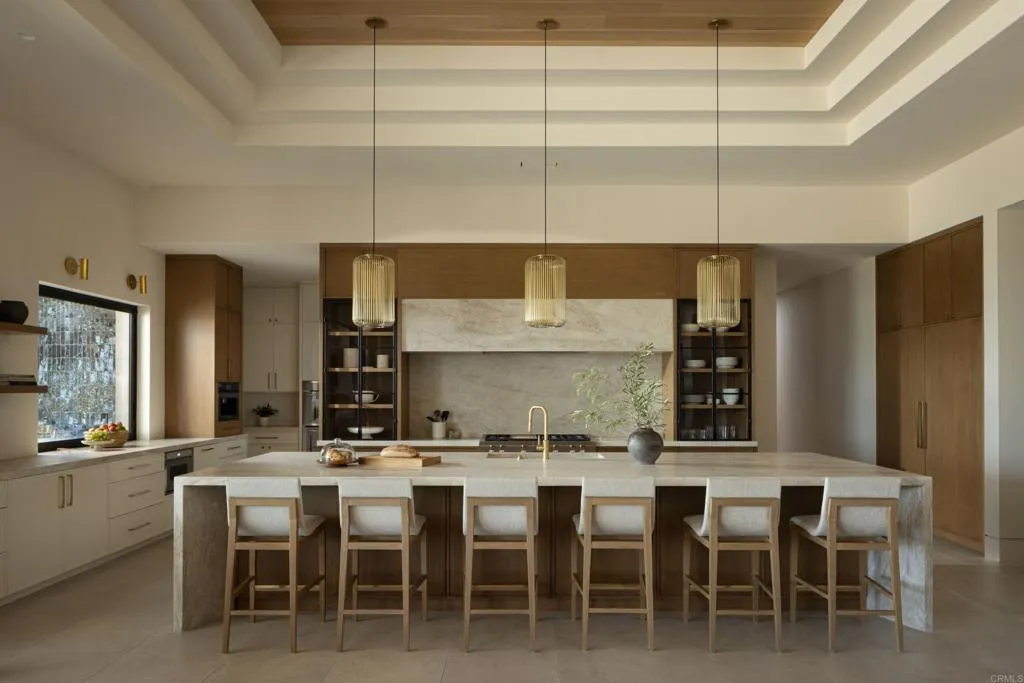
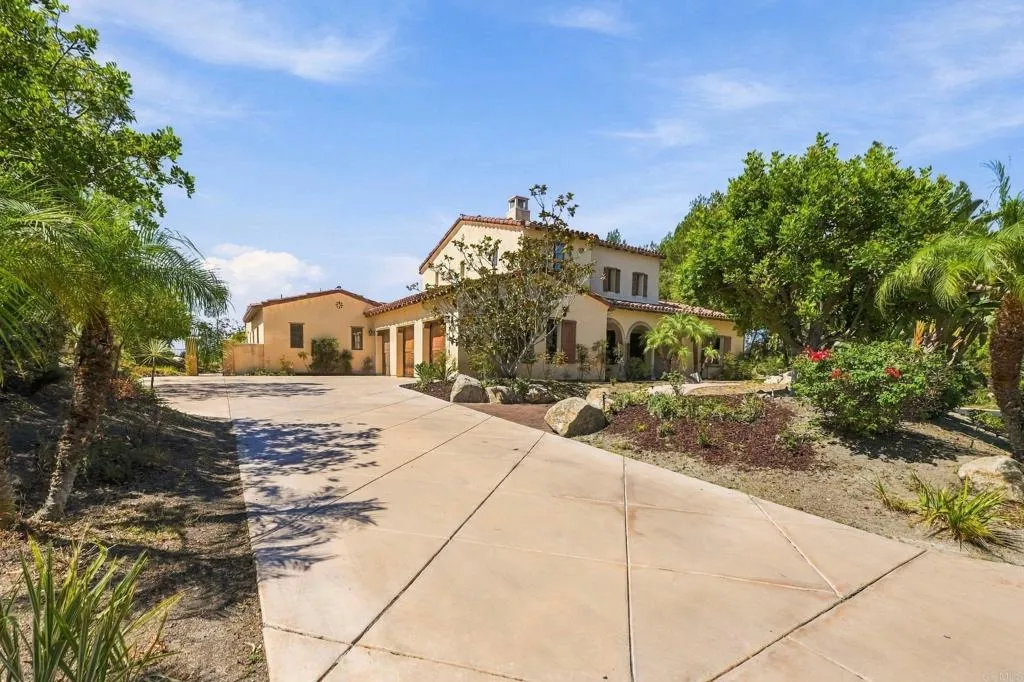
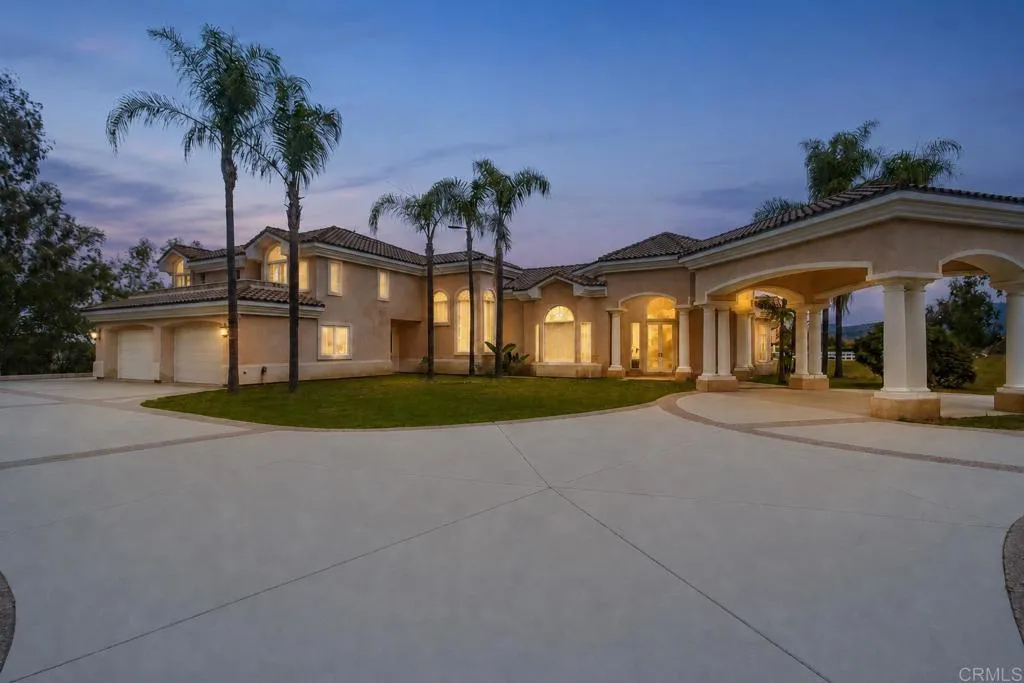
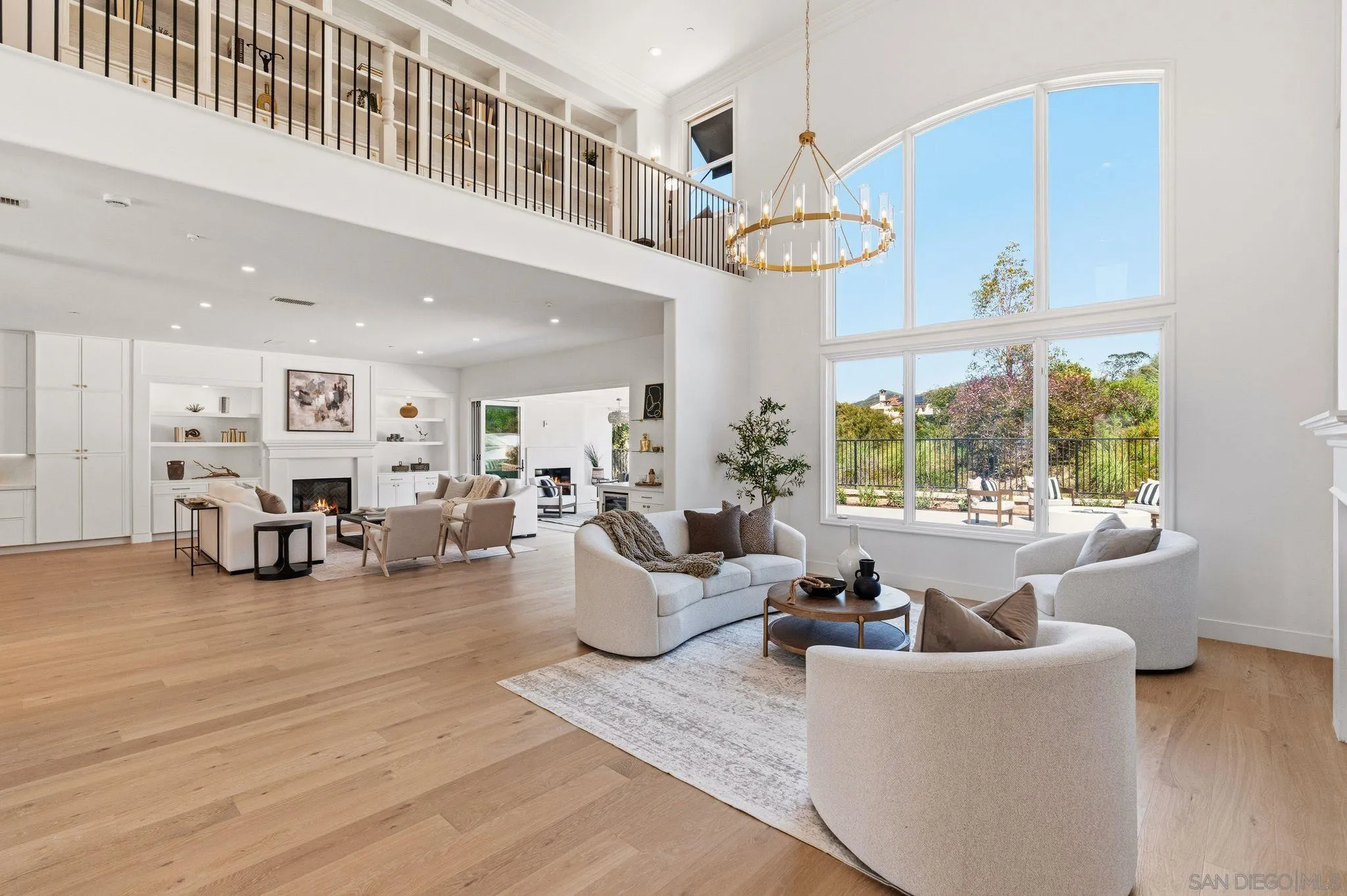
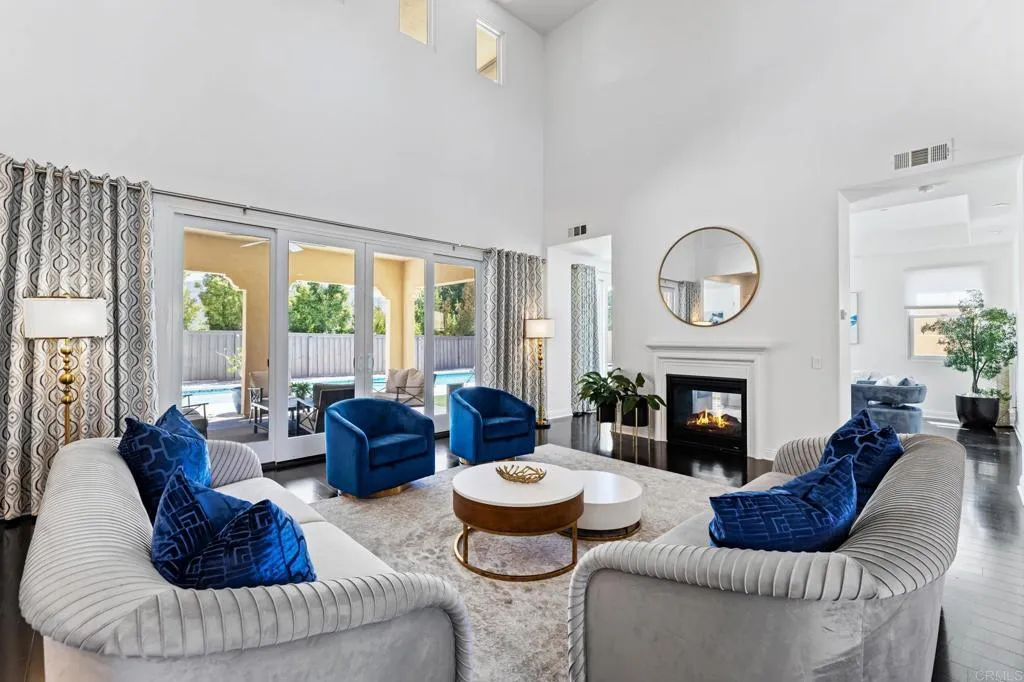
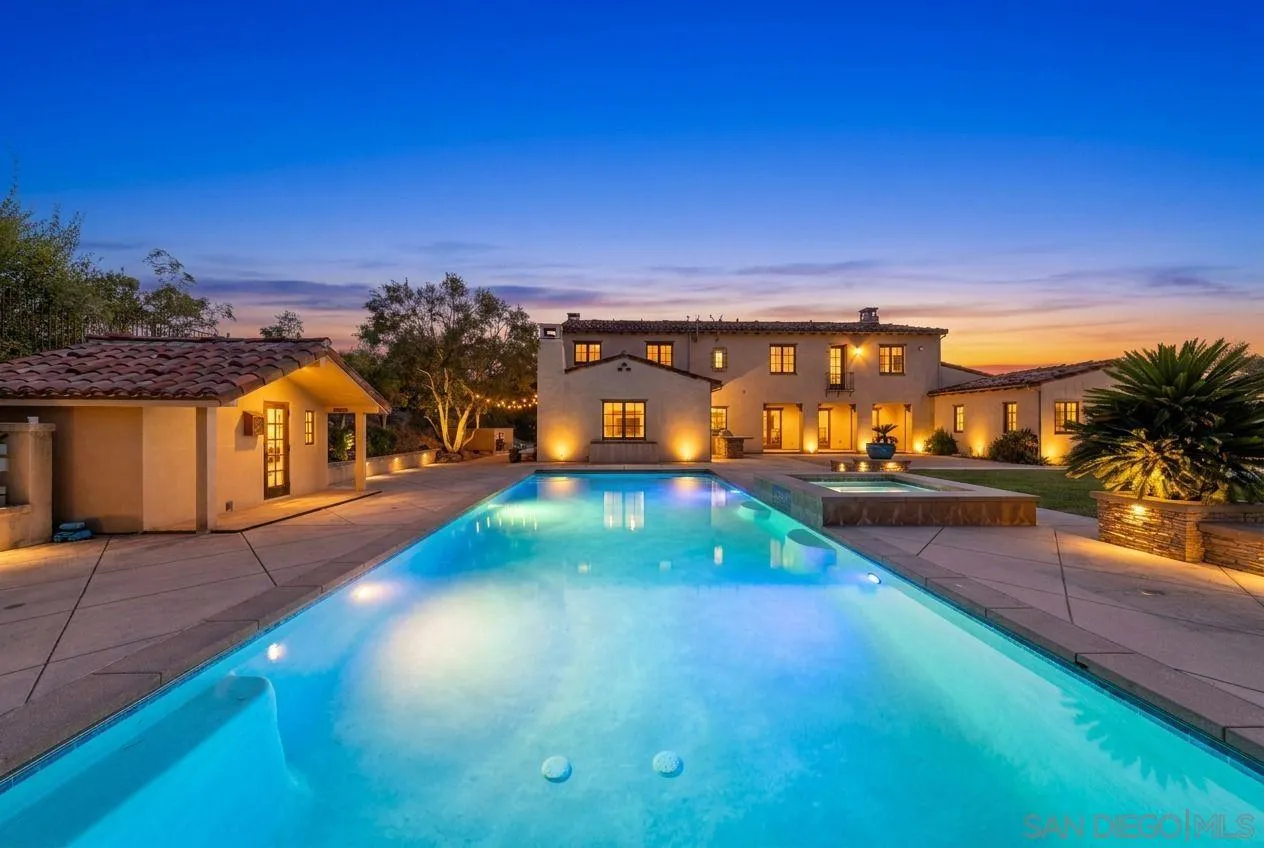
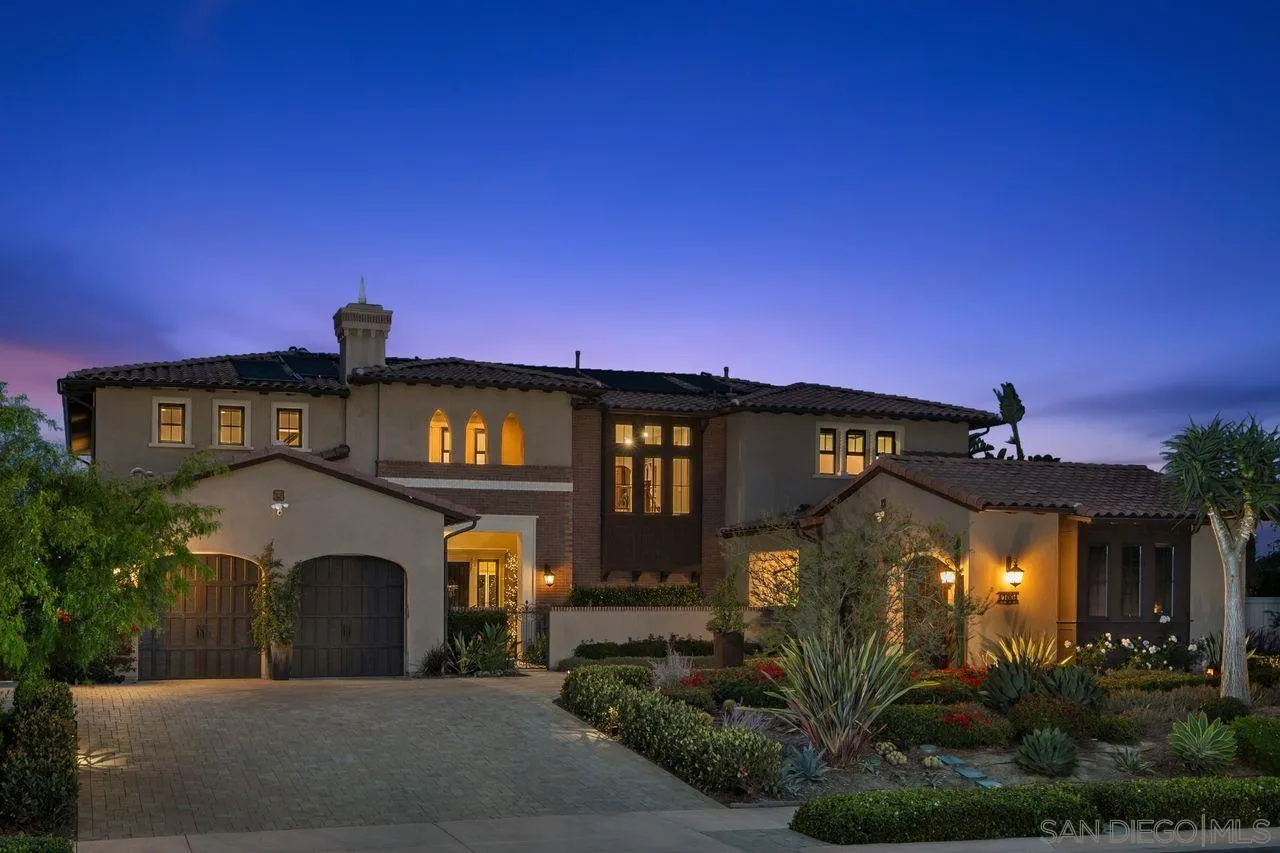
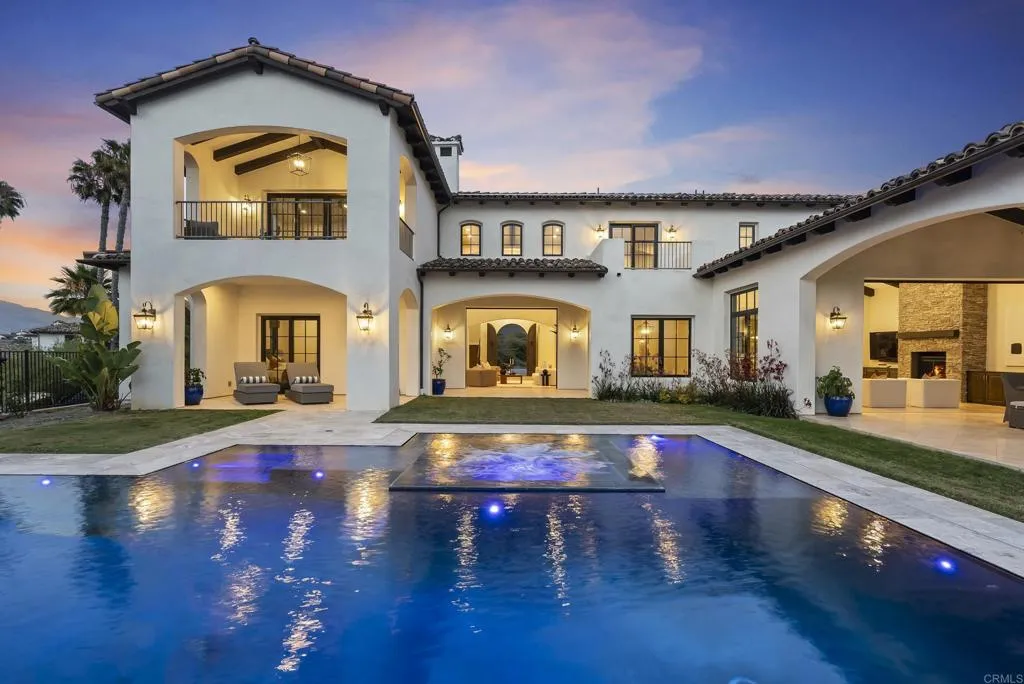
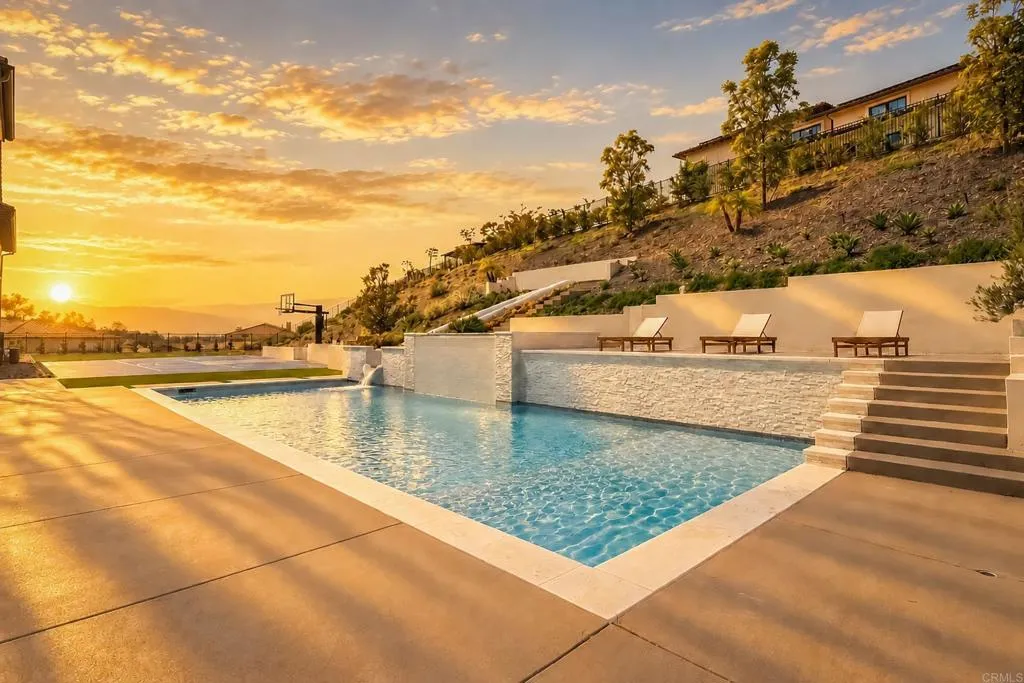
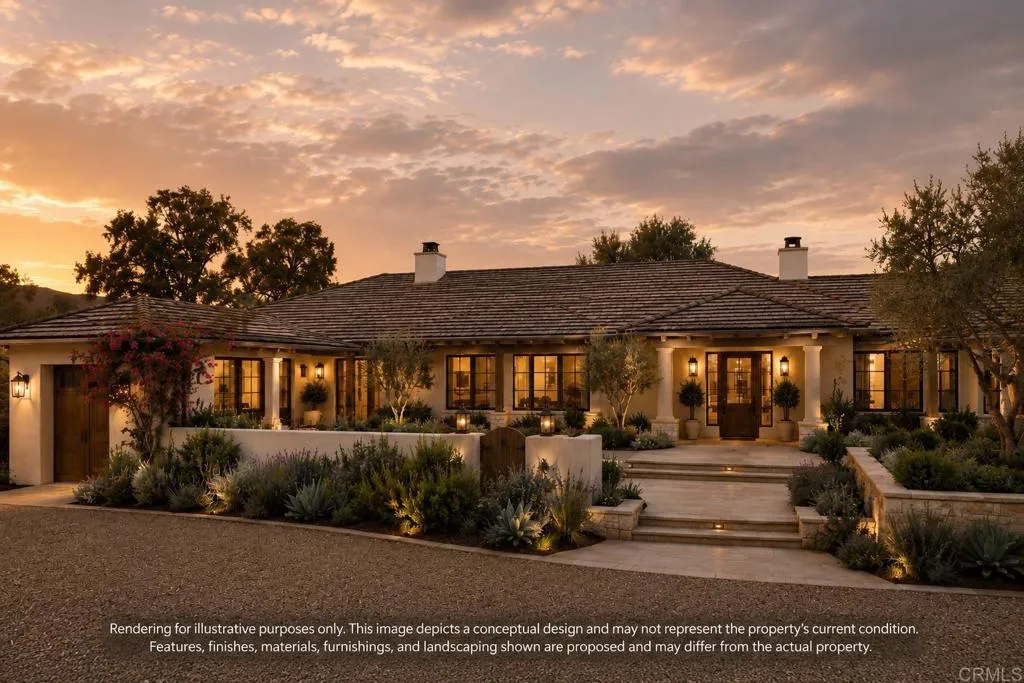
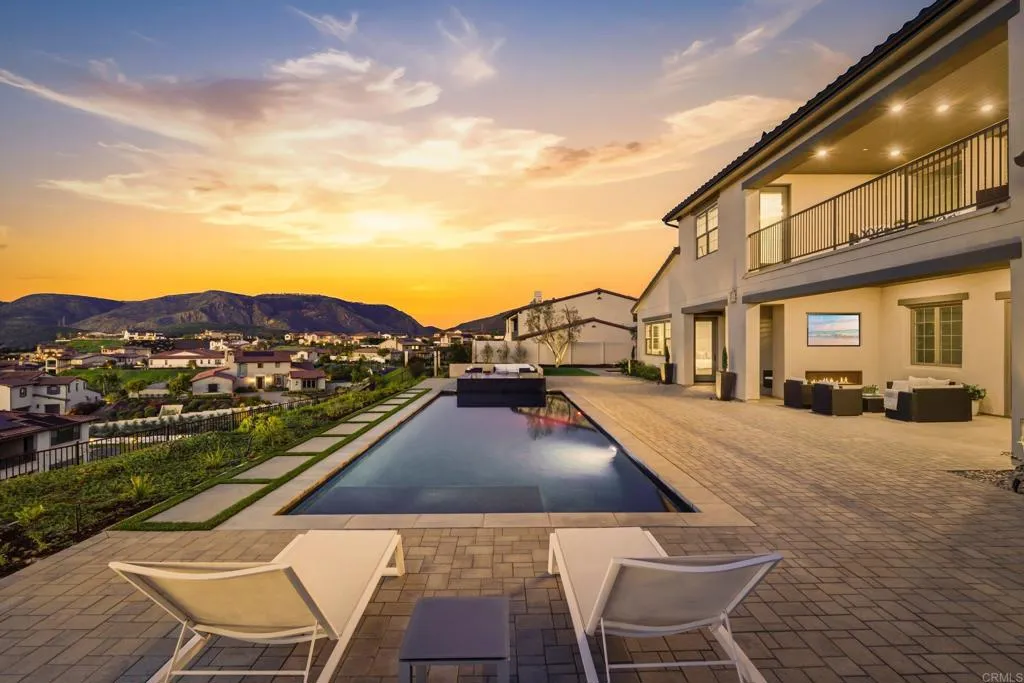
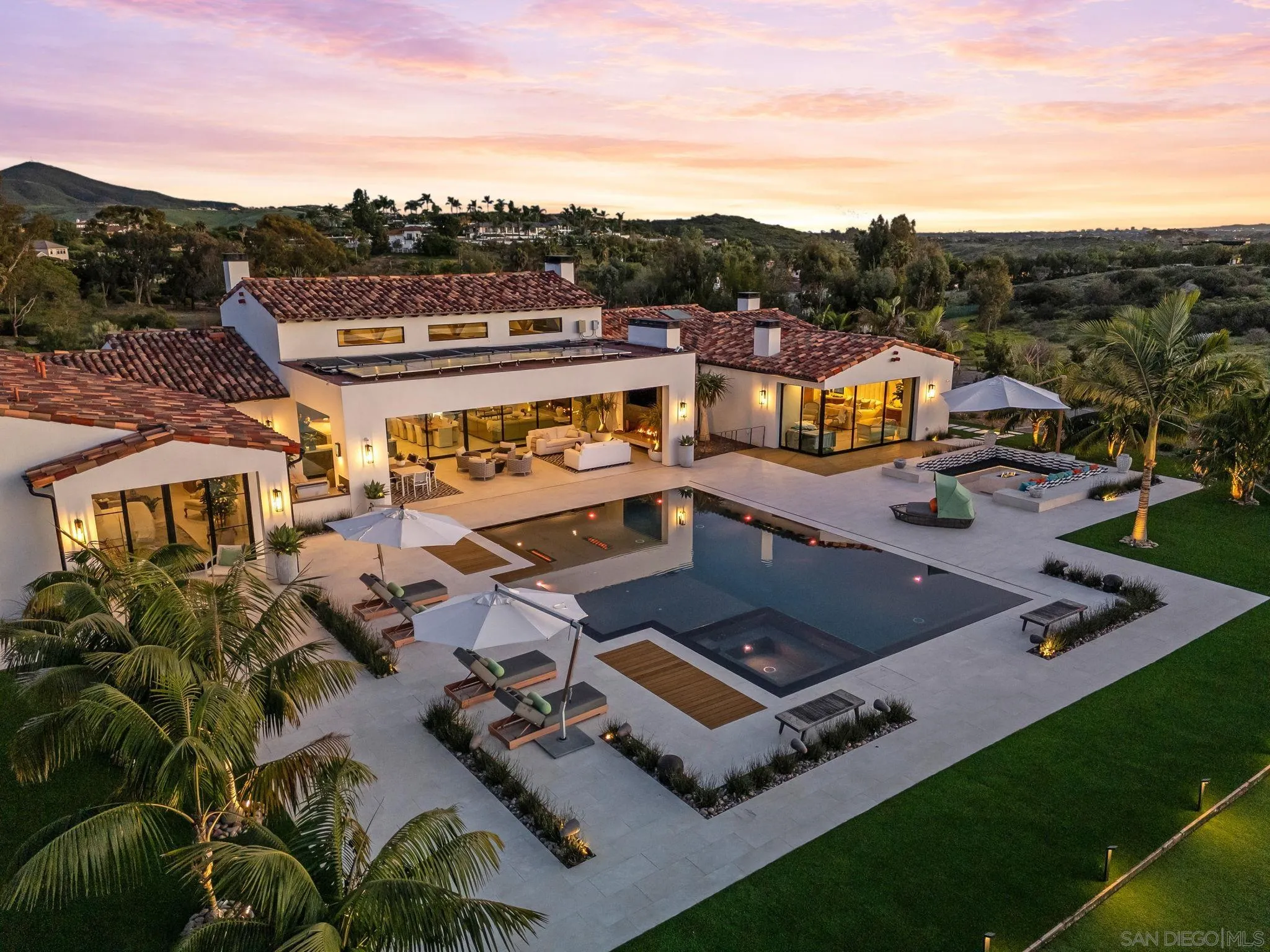
Architecturally, The Crosby continues the Spanish Colonial Revival tradition Lilian Rice established for the broader Rancho Santa Fe area back in the 1920s, filtered through a more contemporary California lens — red tile roofs, stucco exteriors, courtyards, and covered outdoor living space show up consistently without the community ever feeling repetitive. Villa buyers get either one or two stories, a primary bedroom kept on the main level, a private courtyard, and an outdoor fireplace as standard — the whole product built for someone who wants full club access without taking on the maintenance load of a larger estate. Step up to the 281 semi-custom homes and square footage climbs to somewhere between roughly 2,900 and 5,500-plus, frequently sited to catch either a fairway or hillside view, with a gourmet kitchen and several distinct living areas working together to support the indoor-outdoor lifestyle this climate practically requires. At the top end, the 70 custom homesites hand buyers real design freedom on parcels running up to 1.6 acres, and what's actually been built on them has pushed past 9,000 square feet in places, incorporating whatever a given owner wanted — a wine cellar here, a home theater there, a resort-caliber pool, a separate guest casita, room enough outside to entertain at genuine scale. A Mello-Roos tax applies and varies by property, a fairly standard feature for newer California developments that used the assessment to fund infrastructure during construction, alongside separate HOA dues.
Public school assignment runs through the Solana Beach Elementary School District for grades K-6 and San Dieguito Union High School District from there forward, which for most Crosby families means Solana Santa Fe Elementary, Earl Warren Middle School, and Torrey Pines High School. Enrollment at Solana Santa Fe Elementary sits around 340 kids, with math scores generally falling in the low-to-mid 70s percentage-wise and reading closer to 82% — strong enough collectively to land the school in California's top 5%, with roughly 20 students sharing each teacher on average. From Earl Warren, most students move on to Torrey Pines, a fixture among California's top public high schools, with Canyon Crest Academy available as an alternative for families wanting a different program or schedule. Private options in the broader area include The Nativity School, Horizon Prep, Santa Fe Christian Schools, Cathedral Catholic High School, The Bishop's School, La Jolla Country Day, and Francis Parker — a genuinely deep bench that reflects the surrounding area's demographics.
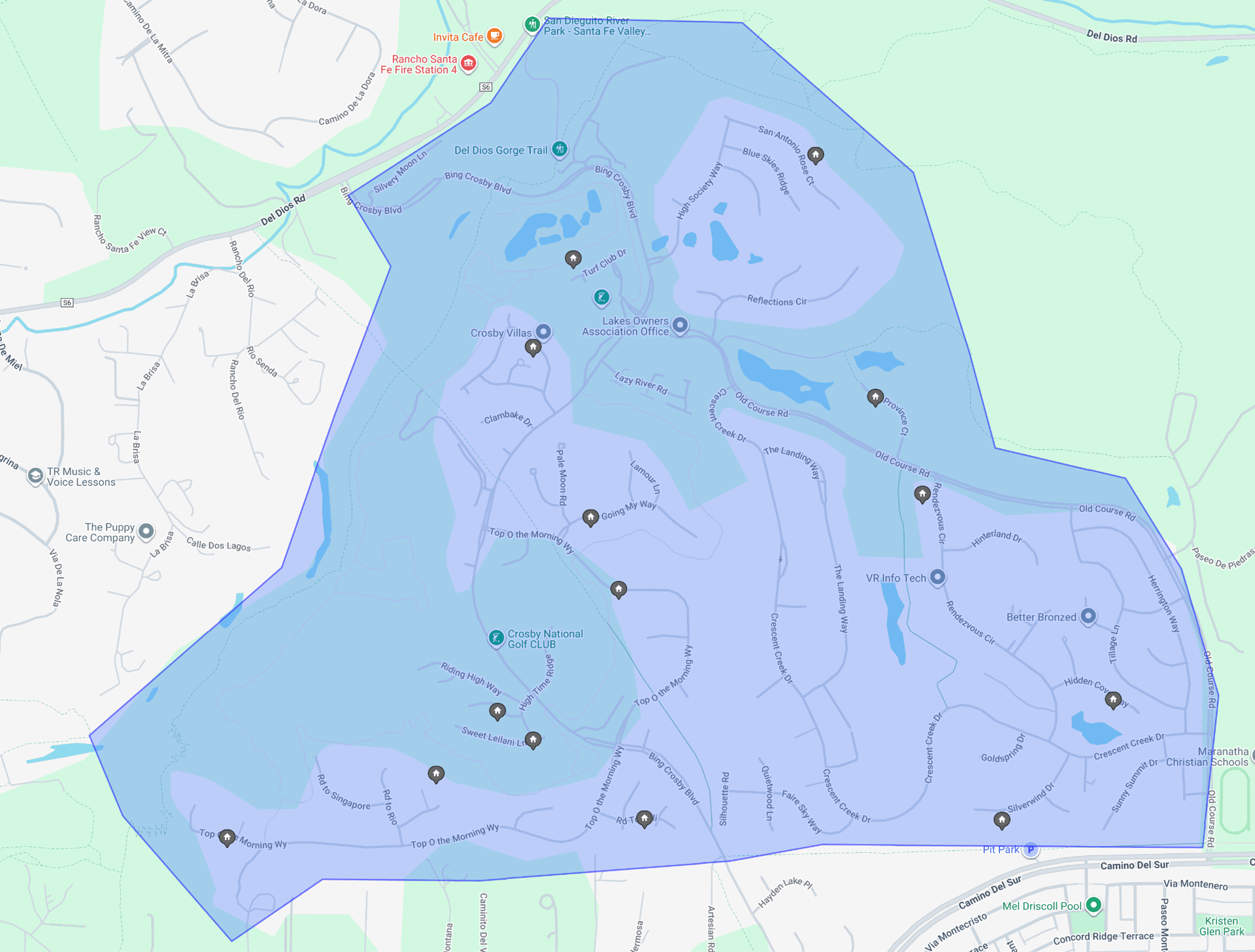
A drive of about two miles gets residents to the Village of Rancho Santa Fe, and the surrounding geography places Del Dios Highway along the top edge of the community, Santa Fe Hills just below it to the south, and Cielo within easy striking distance as well. — The Lakes Above Rancho Santa Fe, a separate development over in the 92127 zip code, shares the general area too. The real geographic win is sitting almost squarely between Interstate 5 and Interstate 15, which means a trip toward the water — Del Mar, Solana Beach, Encinitas — takes roughly the same effort as heading the opposite way toward inland employment hubs like Carmel Valley, Sorrento Valley, or downtown itself. Del Mar's beaches run about 15 to 20 minutes out, San Diego International Airport is roughly a 30-minute drive depending on traffic, and McClellan-Palomar in Carlsbad offers a closer option for private aviation.
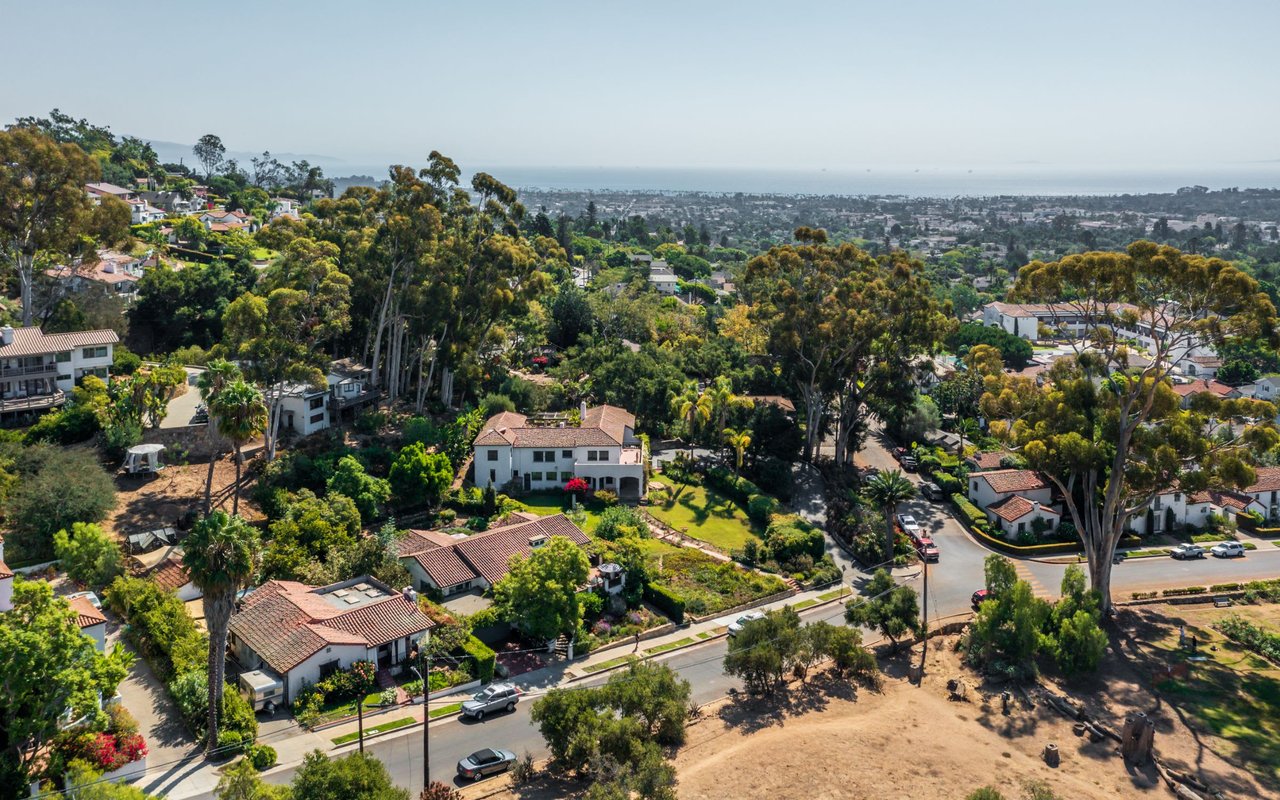
A few minutes covers the distance from The Crosby's gate to the Village of Rancho Santa Fe, still recognizably Lilian Rice's 1920s vision — stucco, clay tile, a canopy of eucalyptus overhead — and home to the essentials: the post office, the public library, a neighborhood market, and a pharmacy. The restaurant count stays intentionally modest but strong: Mille Fleurs has anchored serious French-California dining since 1984, Thyme in the Ranch handles the casual morning-and-midday crowd, and Delicias, Morada, the Rancho Santa Fe Bistro, and Caffe Positano cover the rest of the scene without padding it unnecessarily. Nearby, Del Rayo Village runs its own Sunday farmers market from 9:30 through 2:00, and Paradise Produce Market has spent decades on Del Dios Highway selling everything from fresh produce to pottery and gifts. Bigger grocery runs tend to happen at 4S Commons Town Center — a Ralphs, a Jimbo's Naturally, CVS, banking, and a rotating cast of restaurants — while Cielo Village leans into an Italian-piazza aesthetic, complete with a stone fountain and boutique storefronts, for a shopping trip that feels a touch more elevated without requiring a long drive.
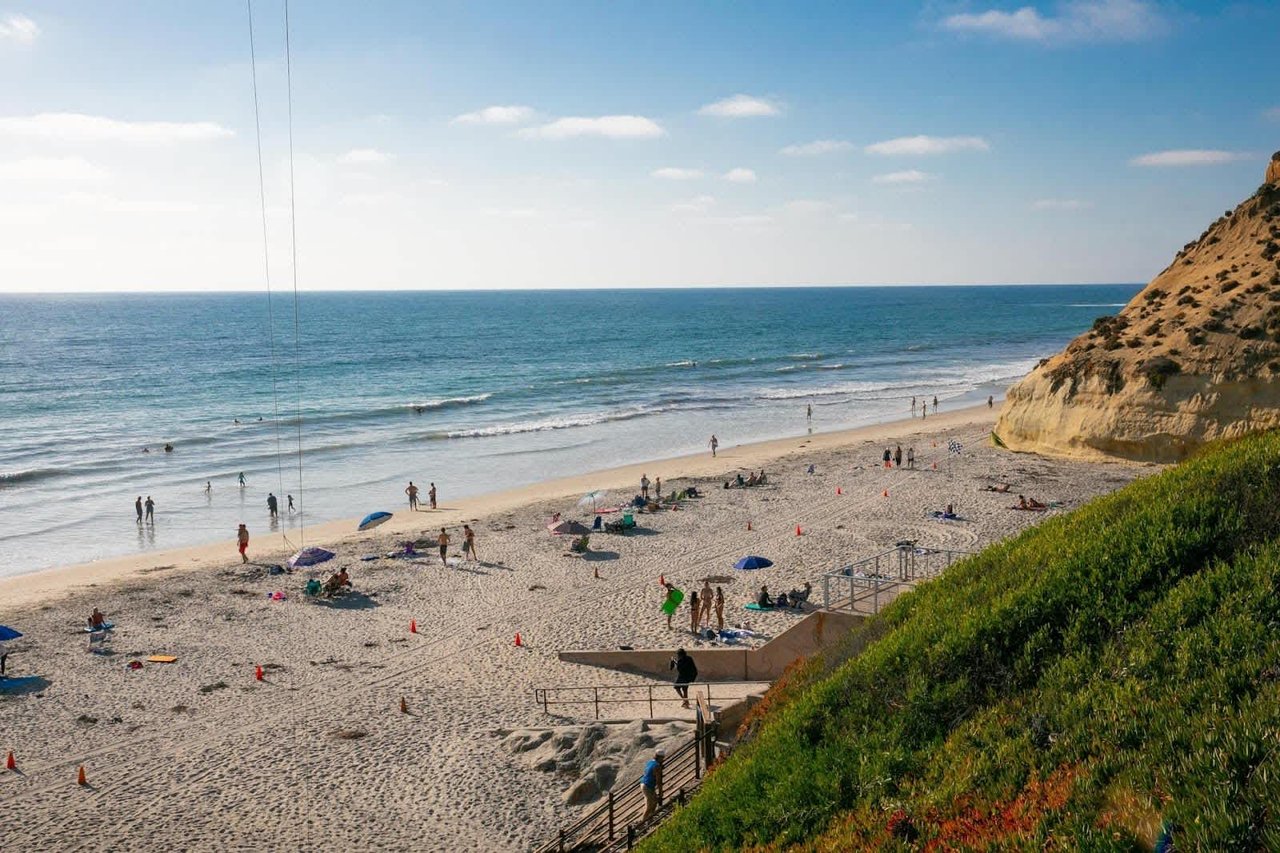
The community's internal trail system isn't just landscaping dressed up to look purposeful — it connects directly into the San Dieguito River Park's Coast to Crest Trail, which runs along the main bridge and the river itself toward the 9th hole, tying The Crosby into a genuine regional trail network rather than a closed loop. Beyond that, the region delivers on nearly every front: Lake Hodges contributes better than 1,200 acres for hiking, biking, and seasonal time on the water, Black Mountain Open Space Park spreads across 2,352 acres with a handful of genuinely worthwhile overlooks, Elfin Forest Recreational Reserve mixes hiking, biking, and horseback trails with the occasional ocean view when conditions cooperate, and San Elijo Lagoon Ecological Reserve protects 915 acres of wetland anchored by a LEED-certified nature center and a solid network of walking trails. The coastline itself — Del Mar down through Solana Beach, Encinitas, and Carlsbad — sits at a manageable driving distance in any direction, the Safari Park keeps things interesting over toward Escondido, and the Del Mar Racetrack, one more thread tying back to Crosby's own involvement in founding it, still hosts a full thoroughbred racing season each year.
The club keeps its own event calendar humming — wine tastings and dinners, cooking classes, and a lineup of holiday gatherings that includes a Santa-themed breakfast popular enough to count as a genuine tradition at this point. Kids get their own separate programming most Friday and Saturday nights, complete with movies, games, and food, which conveniently frees up parents for an evening of their own, and summer break brings dedicated camp options for the same age group. Career-wise, the mix here runs heavy on established professionals and retirees, plus families who specifically want the club built into daily life; a majority hold college degrees, and most residents own rather than rent, giving the whole place a settled, stable quality despite still being relatively young by Rancho Santa Fe standards. Outside the club calendar specifically, plenty of daily movement happens on foot — paths run the length of the property and along the river, the lake park pulls a regular evening crowd, and several smaller pocket parks scattered through the development mean green space is never far from any given front door.
On paper, 92127 puts this address in Rancho Bernardo rather than Rancho Santa Fe itself — a fact some buyers weigh heavily and others shrug off entirely, though day-to-day the feel here has far more in common with Rancho Santa Fe than with the rest of its actual zip code. Club dues and buying a home remain two completely separate transactions, and the initiation cost specifically has swung noticeably over different market cycles, with the Social tier running cheaper than a full golf membership across the board; how central the club ends up being to any given household is really just a matter of personal choice rather than something baked into ownership. It's also worth being direct about fire risk, since it applies to this whole stretch of the county — dry vegetation, difficult terrain, and Santa Ana wind events are exactly what insurers watch closely, and the same open land that gives this community its natural character comes with a corresponding responsibility once fire season sets in each year.
There's an easy version of this story where a developer licenses a famous name, builds a golf course, and calls it a day — plenty of communities in Southern California follow exactly that playbook. This one didn't need to, because the man whose name is on the gate actually lived here, kept horses on this land, and helped build institutions the region still relies on today. That authenticity shows up in smaller ways throughout the property too: a golf course design serious enough that Fred Couples put his name behind it early in his design career, hundreds of acres left genuinely wild rather than reshaped for photographs, and a real trail connection into the regional park system rather than a private loop dressed up to look connected. None of that makes this the oldest or the largest or the most exclusive address in the area, and it was never trying to be. What it offers instead is something harder to fake: a golf-centered lifestyle built on ground that actually earned its name.
(Qualitative overview — figures fluctuate and buyers should confirm current data with an agent)
With three distinct property types (villas, semi-custom homes, and custom homesites), buyers should clarify which category fits their needs early, since pricing, maintenance responsibility, and customization potential vary significantly across the three.
Homes with direct golf course frontage or hillside views tend to command a premium, particularly among the semi-custom homes.
Because club membership is entirely separate from home ownership, buyers focused on golf access should confirm current initiation fees and membership tier availability directly with The Crosby Club.
Buyers should confirm current Mello-Roos assessment amounts for a specific property, since this tax varies and adds to the overall carrying cost beyond standard HOA dues.
Because The Crosby sits in the 92127 zip code (technically Rancho Bernardo) rather than Rancho Santa Fe's 92067, buyers should confirm how this affects any assumptions about school boundaries or municipal services.
Is The Crosby actually connected to Bing Crosby?
Yes, genuinely. Bing Crosby lived in Rancho Santa Fe, raised horses there, helped establish the Del Mar Racetrack, and hosted the original 1937 golf tournament that became the AT&T Pebble Beach Pro-Am.
How many homes are in The Crosby?
The community includes 70 villas, 281 semi-custom homes, and 70 custom homesites across 722 acres.
Who designed The Crosby golf course?
Fred Couples designed the course with architect Brian Curley and the Schmidt-Curley Design firm; it opened in 2001.
Is The Crosby in Rancho Santa Fe?
The Crosby sits in the 92127 zip code, which is technically part of Rancho Bernardo, though its character and lifestyle align closely with Rancho Santa Fe.
Does home ownership at The Crosby include club membership?
No, club membership is separate from home purchase, with tiers including Full Golf, Sports, Social, and a Residents option, each carrying its own fees.
How big are the homes at The Crosby?
Semi-custom homes range from about 2,900 to over 5,500 square feet, while custom homes on homesites up to 1.6 acres have exceeded 9,000 square feet.
What school district serves The Crosby?
The Solana Beach Elementary School District and San Dieguito Union High School District, typically Solana Santa Fe Elementary, Earl Warren Middle School, and Torrey Pines High School.
How much open space does The Crosby preserve?
More than 190 acres remain permanent open space, including coastal sage scrub, riparian forest, oak and eucalyptus woodlands, and wetlands.
Does The Crosby connect to regional hiking trails?
Yes, the community's trail system connects to the San Dieguito River Park's Coast to Crest Trail.
Does The Crosby have Mello-Roos taxes?
Yes, Mello-Roos taxes apply and vary by property, in addition to separate HOA dues.
Thinking about buying a home in Rancho Santa Fe?
Allow our team of luxury real estate specialists to help you navigate every step of the buying or selling process. With deep local expertise and firsthand knowledge of the Rancho Santa Fe market, we provide the insight and strategy you need to make confident real estate decisions.
Connect with The Comiskey Group at Compass for trusted representation, whether you’re searching for your next Rancho Santa Fe property or ready to list your current home.