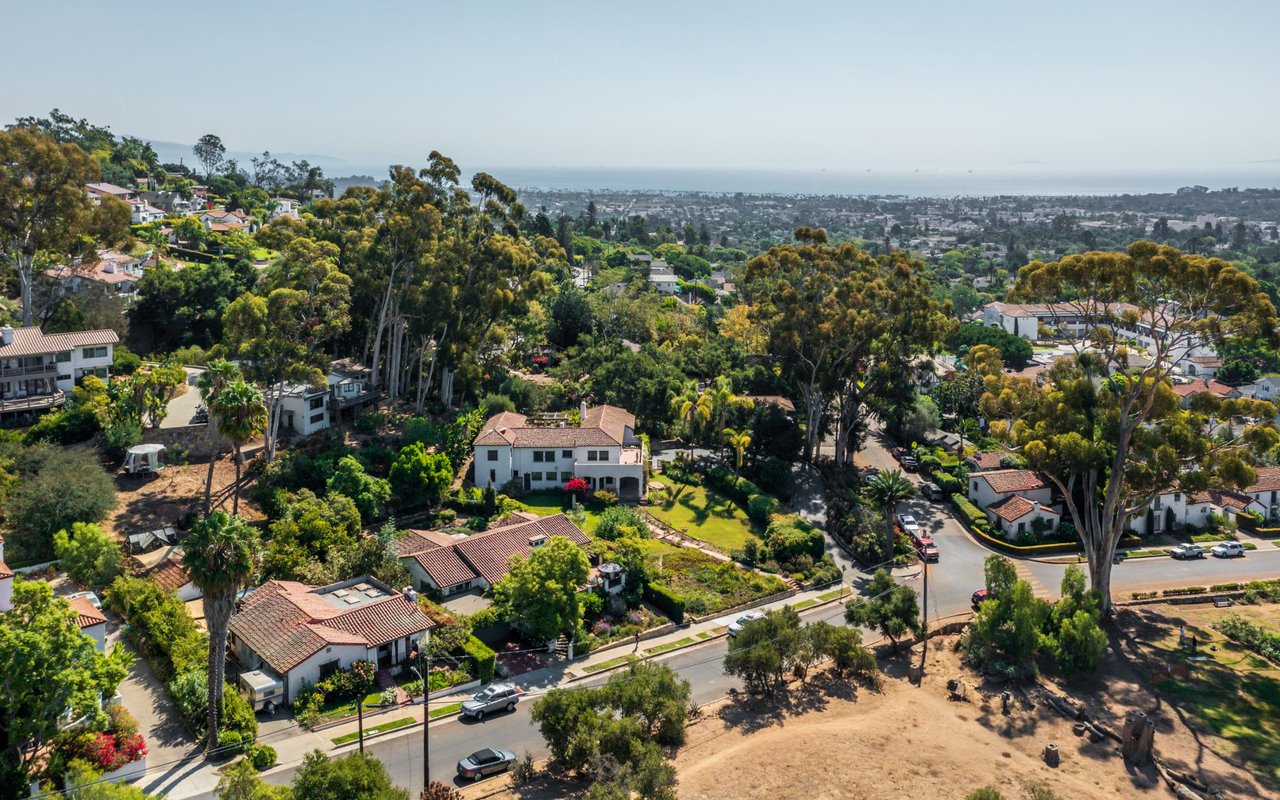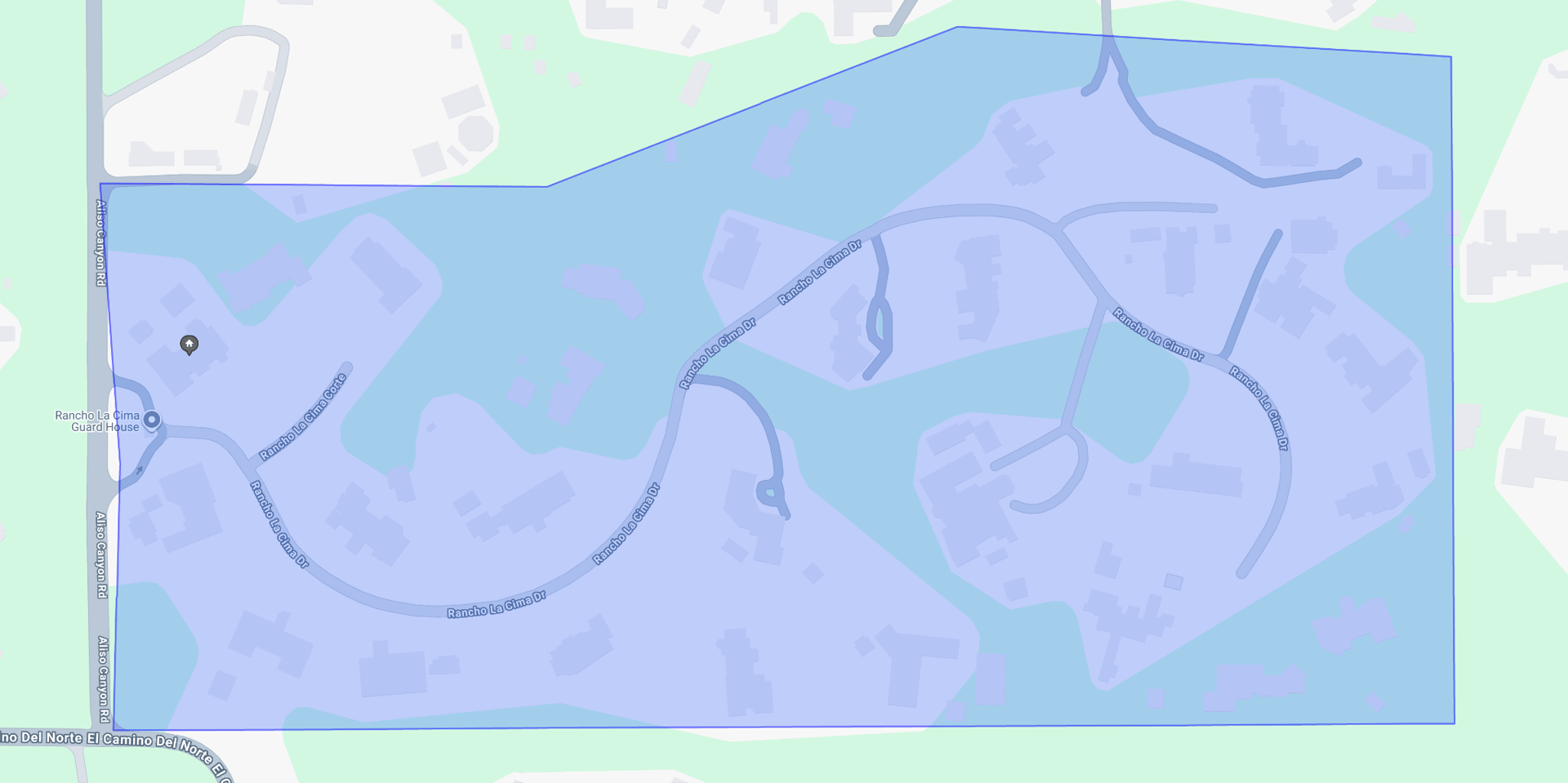
A community this size tends to stay under the radar simply by virtue of how few people ever have a reason to drive through it — somewhere between 25 and 26 custom estates in total, tucked behind gates that most of San Diego County has never had occasion to notice, despite sitting a manageable 25 minutes from downtown. Construction here is comparatively recent by Rancho Santa Fe standards: the community got underway in the late 1990s, and the great majority of homes were finished within a tight window between 1998 and 2000.
The defining fact about this community isn't its amenities or its architecture — it's simply how few homes exist here. There's no elaborate HOA governance structure to speak of, no thick binder of design rules, just a handful of substantial estates where the ownership pool is small enough that people generally know who their neighbors are without living on top of each other. Getting both familiarity and real separation from the same address is a harder combination to find than the underlying acreage might suggest.
Spanish Colonial and Mediterranean design carries the neighborhood, expressed through the usual materials palette — clay tile roofing, earth-toned stucco, ironwork on gates and railings — but applied with enough individual variation that no two properties read as copies of each other. That variation exists because every home here was designed and built as a one-off commission rather than drawn from a shared builder's catalog: expect somewhere in the 5,000-to-10,000-square-foot range depending on the specific lot, with layouts ranging from a two-story home organized around a dramatic central great room to a single-level estate wrapped entirely around its own courtyard. A long approach drive terminating in a motor court shows up on enough properties to feel like a defining local trait rather than a coincidence. Within the Spanish-Mediterranean umbrella, some owners have leaned rustic — exposed wood beams, hand-painted tile work — while others have pushed toward something cleaner and more contemporary; what's consistently absent is anything resembling a glass-and-steel modern build or an East Coast-style colonial breaking up the streetscape.
Parcels run close to two acres on average, generous enough to support a tennis court on some properties, a pool and spa on nearly all of them, and still leave a meaningful buffer of green space at the lot line. Given how much of the calendar here is genuinely pleasant outdoors, most homeowners have invested accordingly — shaded loggia structures wired for ceiling fans, built-in fireplace features, outdoor kitchen setups anchored by a grill and often a wood-fired pizza oven, and dining areas sized to seat a dozen guests without feeling cramped. Pool design skews toward statement pieces rather than simple rectangles: expect infinity edges cut into hillside lots, integrated spa features, and water elements placed as much for sound as for looks. Plantings throughout draw from a familiar Southern California vocabulary — bougainvillea vines, citrus and olive trees, borders of lavender — established long enough now to double as a natural privacy screen between properties, giving the whole neighborhood a greener, almost lush quality that catches newcomers from drier climates off guard. A number of homes were sited specifically to face west, which pays off nightly once the marine layer clears and the sky actually puts on a show.
Sitting inland gives this community a genuine break from the gray mornings that blanket the coastline through early summer, while staying close enough that Del Mar's sand is a roughly quarter-hour drive away on an ordinary day. Interstate 5 stays within reasonable reach without ever becoming audible from a backyard, and Highway 56 provides a route east toward Escondido and eventually the 15. Local streets tell their own story about the pace of life here — tight, curving, built at a scale that assumes horses on the shoulder and kids on bikes rather than commuter traffic, which forces a slower speed almost by physical necessity. Residents tend to describe the adjustment period fondly in hindsight: the drive itself becomes part of shedding the day before anyone's even reached their own driveway.
Elementary and middle school students here are zoned to the Rancho Santa Fe School District, which in practice means R. Roger Rowe School — enrollment sits in the 300-to-350 range, the campus went through a ground-up rebuild in 2010, and academically it's a name that comes up whenever anyone lists California's better-performing public schools, helped along by a roughly 14- or 15-to-1 ratio of students per teacher. San Dieguito Union High School District picks up from there, with Torrey Pines serving as the assigned high school for most addresses — a campus whose name shows up often enough on statewide and national rankings that it barely needs introduction locally, though Canyon Crest Academy in Carmel Valley and San Dieguito Academy in Encinitas offer alternate paths for families who apply into the district's choice program. On the private side, families in the wider region look toward The Bishop's School in La Jolla, Santa Fe Christian Schools, and Army and Navy Academy in Carlsbad, plus a handful of smaller independent programs — the draw there is usually a specific teaching philosophy or tighter classes rather than any real gap in what the public schools deliver.
The Village stays just a short drive from home and keeps its footprint intentionally modest — a market, a pharmacy, a scattering of boutiques, and a pace where people linger on the sidewalk rather than rush between errands. Mille Fleurs opened its doors back in 1985 and hasn't relinquished its spot as the neighborhood's special-occasion restaurant since — French-rooted California cooking, a live pianist most weekend nights, and a courtyard setting that works equally well for an anniversary dinner or a random Tuesday when cooking at home just isn't happening. Lilian's, housed at the Inn at Rancho Santa Fe and named for the architect who shaped the original 1920s Village plan, focuses on California cooking built around locally sourced ingredients, while a short walk away, Thyme in the Ranch handles the coffee-and-pastry crowd early enough that showing up late usually means the good scones are gone. Round out the list with Dolce's Italian happy hour, Nick and G's wood-fired pizza and house-made pasta, and Hacienda de Vega's upscale Mexican menu paired with a tequila selection worth the trip alone. For something more occasion-worthy, Rancho Valencia's on-site restaurants draw from their own culinary garden for a coastal-ranch approach to the menu, and the Fairmont Grand Del Mar spreads dining across several distinct venues, from formal to poolside — with actual beachfront restaurants in Del Mar and Solana Beach close enough to count as a normal weeknight option rather than a special trip.
None of these 25 or so homes back up to a fairway, but that hardly limits the golf options nearby. The Rancho Santa Fe Golf Club — a 1929 Max Behr layout limited to Covenant residents — carries a reputation as one of the finest walking courses anywhere in the country, and recent renovation work refreshed its fairway turf and bunkering. The Farms Golf Club, a 1984 collaboration between Tommy Jacobs and the Dye family, has built a name for difficulty severe enough that Phil Mickelson has publicly called out its tee shots specifically. The Bridges answers with a Robert Trent Jones II design built around dramatic elevation change and a Tuscan-inspired clubhouse; Del Mar Country Club pairs its own 18 holes with tennis and fitness facilities inside a clubhouse built to host large events; and Fairbanks Ranch Country Club combines 27 holes with tennis, swimming, and enough of a social calendar to have once hosted equestrian competition during the 1984 Olympics. The Crosby Club adds yet another demanding layout with its own full amenity slate. Buyers who want racquet sports without a golf commitment have the Rancho Santa Fe Tennis Club as a dedicated alternative, alongside strong court facilities maintained at most of the clubs above.
Horse culture took hold in this stretch of San Diego County generations before most of today's houses were built, and the trail network still shows it — inside Covenant boundaries alone, riders and residents share close to 60 miles of dedicated pathway, some of it winding under heavy tree cover, some opening onto stretches where the Pacific becomes visible in the distance. One especially well-used route wraps around the perimeter of the Rancho Santa Fe Golf Course, built wide enough for two horses to pass comfortably side by side and accessible enough that both first-timers and serious riders use it regularly. Osuna Ranch has built a solid reputation training and showing hunter-jumpers, and enough Olympic-caliber riders have trained locally over the years to say something about the depth of expertise available in the area. Plenty of properties throughout the broader community keep horses on-site, and for those without that kind of acreage, boarding operations scattered around the area fill the gap. Seasonal polo adds one more layer to the culture — a horse trailer heading toward a match, or a rider working a mount along a roadside trail, is a completely ordinary sight most mornings.
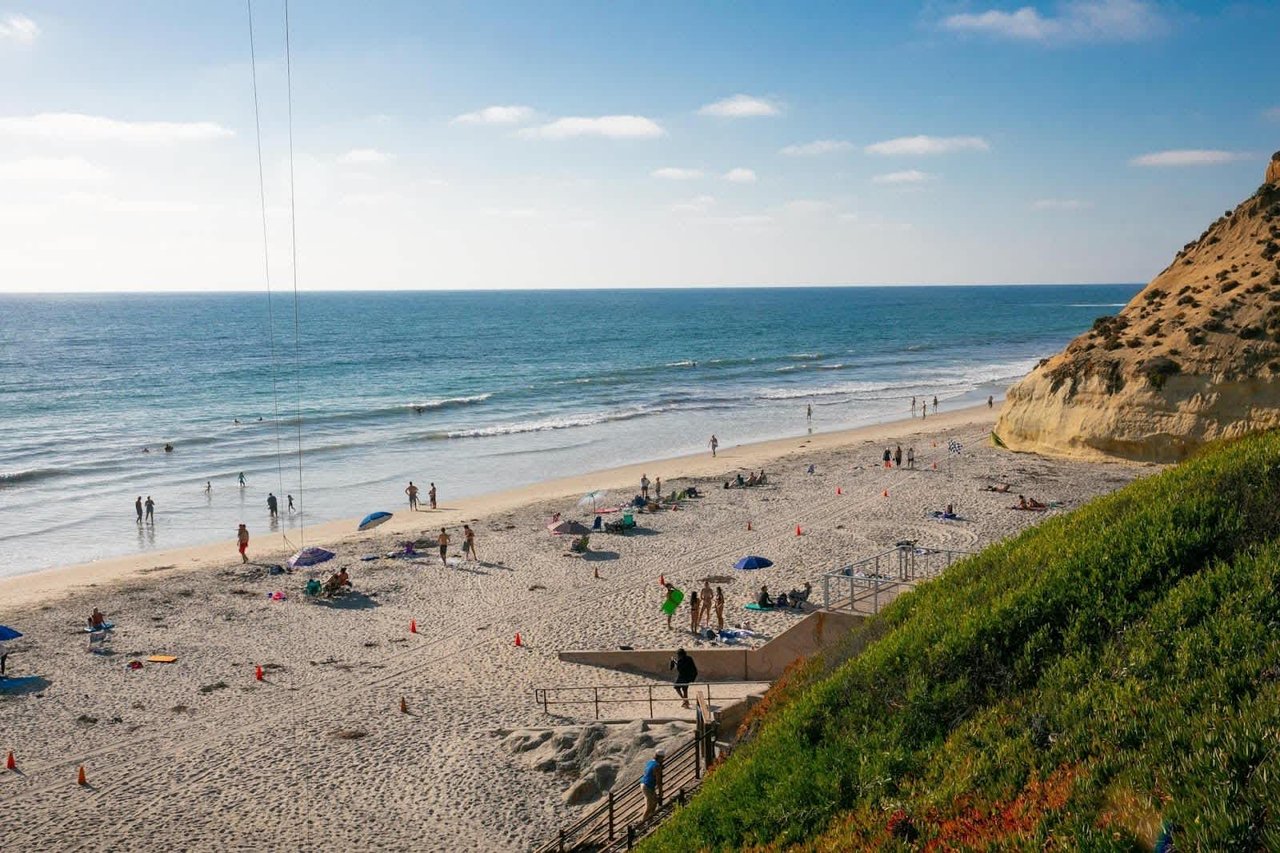
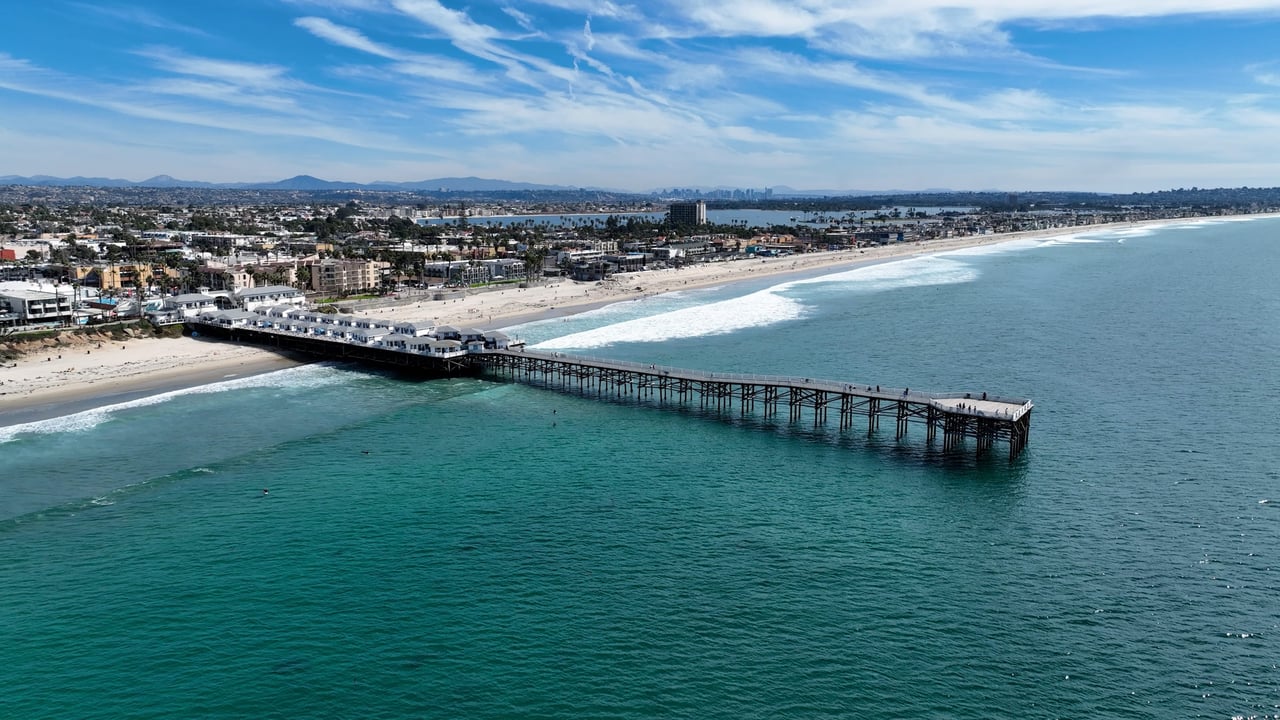
The Rancho Santa Fe Arroyo sets aside 68 acres along the San Dieguito River for Covenant residents, offering hiking, pond fishing, and even primitive camping in a setting that feels genuinely removed from everything nearby, while the Ewing Preserve nearby adds its own stretch of native-landscape trails. The bigger pull for most people, though, is the ocean itself — Torrey Pines State Natural Reserve, just to the west, protects more than 2,000 acres of undeveloped coastline and shelters the rarest native pine species in the country, its trails delivering sweeping Pacific views above beaches that stay noticeably calmer than the more crowded sand further south. Del Mar's central beach stretch, running roughly from 15th Street down to the river mouth, ranks among the better beach segments in San Diego County, backed by Powerhouse Park's picnic grounds and play area, and the off-leash dog beach at the northern end has turned morning walks with the family dog into a genuine local ritual. The San Dieguito River Trail cuts through restored wetland starting near a Del Mar-area trailhead, eventually connecting all the way from the coast to inland high ground for anyone who'd rather cover that distance on foot or by bike.
There's no single professional profile that defines who buys into Rancho La Cima, but there's a recognizable sensibility: people who've reached a level of success where privacy matters more than visibility, families who want real security and space without giving up access to culture and amenities, retirees moving down from even bigger properties who still expect a high standard of living. "Quality over flash" comes up often enough in conversations about the community that it's practically a tagline. Career backgrounds skew toward entrepreneurship, medicine, law, and executive roles, plus a fair share of retired professionals, and the dinner-table conversation at the local restaurants tends to circle back to travel, investments, kids' achievements, and grumbling about traffic backups on I-5. Round-the-clock guard-gated security is a real, tangible comfort for a lot of families here — bikes and packages that stay put, kids who can move around the neighborhood with a level of freedom that would be unrealistic somewhere more exposed. Socially, the small scale cuts in a useful direction either way: close enough that most residents recognize each other, roomy enough that anyone who'd rather stay private can do exactly that without drawing attention.
Part of understanding this community is understanding what it deliberately isn't: Rancho La Cima sits outside The Covenant, the original planned district the Santa Fe Land Improvement Company laid out in the 1920s, which means no built-in access to Covenant-only amenities like the historic golf club — but also no requirement to route home improvements through that Covenant's architectural review board. Many owners treat that as a genuinely favorable trade: full Rancho Santa Fe cachet, the same 92067 zip code, with considerably more latitude over what they can do with their own property. The neighboring communities each take a different angle on the same broad appeal — Fairbanks Ranch leans into bigger lots and equestrian infrastructure, The Bridges is built around golf and resort-style amenities, Cielo offers a newer, more contemporary building stock. Across all of them, including this one, the throughline is a deliberate step back from San Diego County's usual density and pace, a trade that costs a little extra drive time to the airport or downtown but one that most residents here would tell you is worth every extra minute.
(Qualitative overview — figures fluctuate and buyers should confirm current data with an agent)
With only 25 to 26 total homes, Rancho La Cima has one of the smallest inventories of any Rancho Santa Fe community, and listings here are genuinely rare when they appear.
Because the community sits outside The Covenant, buyers gain design flexibility but should confirm which specific amenities (including golf club access) are and are not included before assuming parity with Covenant properties.
Homes with resort-caliber outdoor living already in place (infinity pools, mature landscaping, outdoor kitchens) tend to draw stronger interest than properties requiring that investment.
Because most homes were built within a tight 1998–2000 window, buyers should expect relatively similar construction quality and age across the community, with differentiation coming mostly from updates, lot orientation, and views.
Proximity to multiple top-tier golf clubs (without requiring golf-community HOA dues) tends to appeal to golf-focused buyers who want flexibility in club membership rather than a single mandatory affiliation.
How many homes are in Rancho La Cima?
Rancho La Cima consists of roughly 25 to 26 custom homes, making it one of the smallest gated communities in Rancho Santa Fe.
When were homes in Rancho La Cima built?
Most homes were built between 1998 and 2000, making this one of the more recently developed enclaves in the Rancho Santa Fe area.
Is Rancho La Cima inside The Covenant?
No, Rancho La Cima sits outside The Covenant boundaries, though it shares the same 92067 zip code and general Rancho Santa Fe identity.
How big are the homes and lots in Rancho La Cima?
Homes typically range from about 5,000 to 9,000 or 10,000 square feet, set on lots averaging close to two acres.
Does Rancho La Cima have shared community amenities like a clubhouse?
No, Rancho La Cima does not include shared amenities such as a clubhouse or community pool; residents rely on individual estate amenities and nearby clubs and resorts instead.
What school district serves Rancho La Cima?
Rancho La Cima falls within the Rancho Santa Fe School District for elementary and middle school, typically at R. Roger Rowe School, and the San Dieguito Union High School District for high school, including Torrey Pines High.
Is Rancho La Cima close to golf?
Yes, though it has no course of its own, Rancho La Cima sits near multiple clubs including The Farms Golf Club, The Bridges, Del Mar Country Club, Fairbanks Ranch Country Club, and The Crosby Club.
Is Rancho La Cima good for equestrian buyers?
Yes, the community sits near extensive equestrian trails, training facilities like Osuna Ranch, and seasonal polo matches, and some homes in the broader area include private horse facilities.
How far is Rancho La Cima from the beach?
Del Mar's beaches are roughly 15 minutes away under normal traffic conditions.
Does Rancho La Cima have an architectural review process like The Covenant?
No, since Rancho La Cima sits outside The Covenant, it is not subject to the Covenant's Art Jury or architectural review requirements.
Thinking about buying a home in Rancho Santa Fe?
Allow our team of luxury real estate specialists to help you navigate every step of the buying or selling process. With deep local expertise and firsthand knowledge of the Rancho Santa Fe market, we provide the insight and strategy you need to make confident real estate decisions.
Connect with The Comiskey Group at Compass for trusted representation, whether you’re searching for your next Rancho Santa Fe property or ready to list your current home.