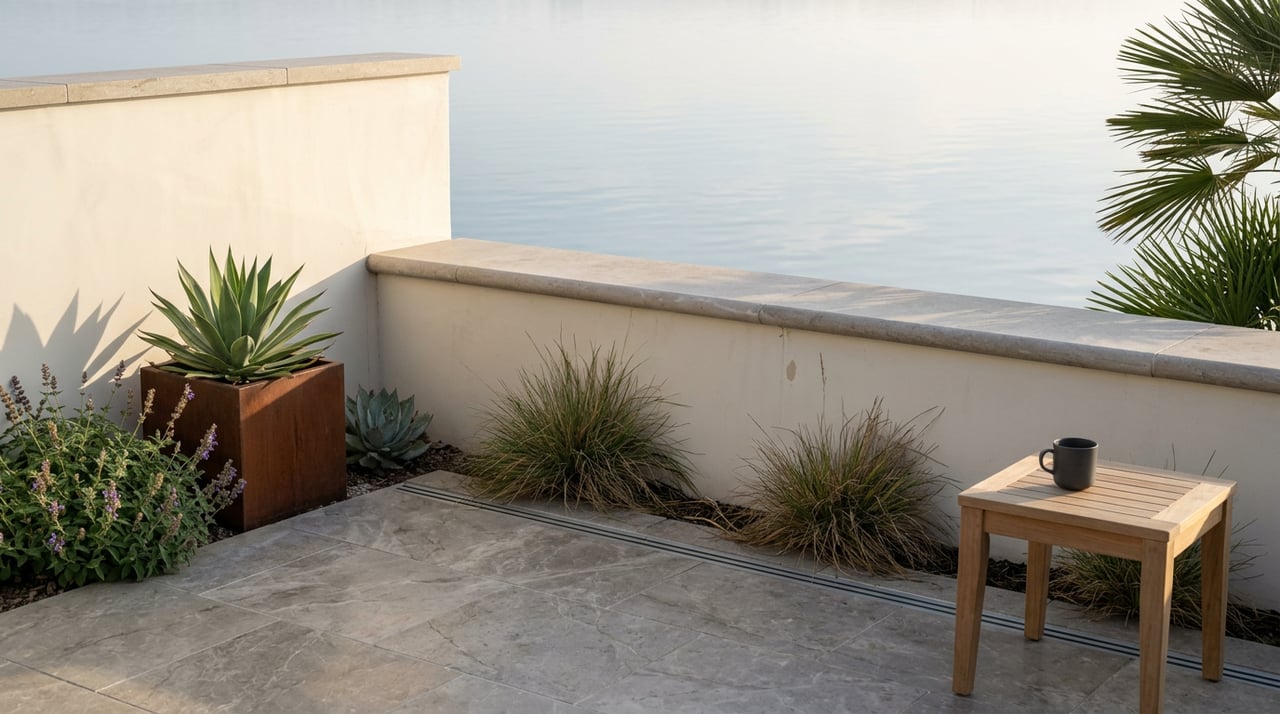
Anyone who has lived a summer on Sail Bay knows the water changes character around late morning. The glass surface at 8 a.m. is not the same bay at 1 p.m., and the difference is not weather. It is a rule most residents have never read but organize their whole day around without realizing it.
The clock nobody prints on the map
Sail Bay sits in the northwest corner of Mission Bay Park, between Santa Clara Point and Riviera Shores. The stretch is famously calm, which is why paddlers, sailors, and rowers cluster here. What is less advertised is why. The entire West Bay is meant mainly for sailing with controlled speeds for powerboats, and Sail Bay itself is limited to 5 mph from 11 a.m. to 5 p.m., May 1st through October 31st.
That single regulation is the reason the bay behaves the way it does. From late morning through the afternoon, wake dies down and the water flattens. Before 11 and after 5, faster boats are legal again, and the bay wakes up. Everything a resident does out here, from where to launch a paddleboard to where to book a sunset table, sits on top of this schedule.
Two calm windows, one daily rhythm
Instead of one long window of usable water, Sail Bay effectively offers two, and they feel completely different.
- Sunrise to about 10:30 a.m. The bay is quiet, the light is soft, and the marine layer usually holds. This is the window for a long paddle out toward Fanuel Park or across toward Crown Point. Sail Bay features some of the calmest waters, making it fantastic for early morning or mid-week paddleboard sessions, with surrounding residential areas providing quieter vibes and beach parks offering picnic areas for a post-paddling break.
- 11 a.m. to 5 p.m. The speed cap takes effect. Motorized traffic slows to a crawl, which is why families gravitate toward Santa Clara Point during these hours. The area features wide sandy launch beaches, massive public grass parks perfect for a midday picnic, and several historic aquatic centers, and launching from this point gives immediate access to a designated passive water craft zone where motorized boats are strictly speed-limited or entirely restricted.
- After 5 p.m. The cap lifts. Wake returns. This is the window for watching the bay from a table, not from a board.
The residents who look most relaxed on the water are the ones who stopped fighting this schedule and started planning around it.
Where the table beats the paddle
Once the 5 p.m. bell rings, the smart move is off the water and onto a patio. Sail Bay's edge holds a specific cluster of restaurants that trade the paddle window for the golden-hour one.
At the Bahia Resort, which has anchored the south edge of Sail Bay since it opened in 1953, Dockside 1953 has plenty of bayside tables on its outdoor patio to take in the water and marina, with a menu that runs from a poke bowl and ale-battered local whitefish fish tacos at lunch to seasonal craft cocktails by the fire pits in the evening. A few minutes down the peninsula, Guava Beach combines a warm and comfortable atmosphere with a lively sports pub-style energy, and it sits just a few steps from both the ocean and Sail Bay. For a slower breakfast before the paddle, the Olive Café serves breakfast and lunch all day with bread baked fresh just up the street at Olive Baking Company, and The Mission is popular among both locals and visitors with a focus on simple, healthy, tasty food with a whimsical edge.
If the goal is water on three sides of the table, Oceana Coastal Kitchen features chef-driven California cuisine and modern ocean-inspired design, with an 800-gallon aquarium as the focal point of the main dining room and a sliding window that fully opens to showcase unobstructed views of Mission Bay. It sits on the Pacific Beach side of the bay, which means the walk or ride over doubles as a scouting mission for the next morning's paddle route.
The through line is simple. The restaurants worth a reservation on Sail Bay are the ones whose best hour begins the moment the speed limit disappears.
The late-summer runway
August through October is the tightest stretch of the year on the bay. Three events in particular will reshape traffic, parking, and shoreline noise on specific weekends. Locals who plan around them get their bay back. Locals who don't will spend an hour looking for a spot near Santa Clara Point.
| Event | Dates | Where | What it means for residents |
|---|---|---|---|
| By the Bay Concert Series | Ongoing summer nights | San Diego Mission Bay Resort's Garden by the Bay, doors at 5:30, music 6 to 9, with themed nights including a Jimmy Buffett tribute | Evening bay noise concentrates on the resort side; the north Sail Bay shoreline stays quieter |
| San Diego Bayfair | September 18–20, 2026, billed as Southern California's largest annual beach festival and powerboat competition on Mission Bay | Central Mission Bay basins | Powerboat noise and crowds spike; the calm-water reputation of Sail Bay is on pause for the weekend |
| Mission Bayfest | October 16–18, 2026, held at Mariner's Point Park in San Diego | Mariner's Point, at the south tip of the peninsula | Traffic backs up along Mission Boulevard; a bike is faster than a car both ways |
Worth mentioning even though it wraps before August: OMBAC's Over-the-Line runs the first two weekends of July at Fiesta Island Park, a San Diego tradition for 70 years known for its carefree, daytime, adults-only atmosphere. If a paddle route ever felt strangely empty on a July Saturday morning, that is where everyone was.
The rentals math, and why it matters at Santa Clara Point
There is one practical reason Sail Bay stays livable even on a peak summer weekend, and it sits at the south end of Santa Clara Point. Mission Bay Aquatic Center is one of the world's largest instructional waterfront facilities, and last year over 30,000 participants experienced surfing, sailing, wakeboarding, wakesurfing, stand up paddling, waterskiing, kayaking, and windsurfing there. The center is owned and operated by Associated Students of San Diego State University and UCSD Recreation and is open to the public, and it is home to The Watersports Camp, a youth day camp for kids ages 6 to 17 sponsored by the YMCA of San Diego County.
The presence of an instructional center of that size shapes who is on the water. Beginners are supervised, gear is standardized, and the flow of launches concentrates in a predictable footprint. For a resident, that means the water twenty yards off a private dock or a Sail Bay beach access point is calmer and less chaotic than the raw participation numbers would suggest.
For anyone who does not own gear yet, the small rental operators tucked into the neighborhood are worth knowing by name. Hui Hui Stand Up Paddleboard Rentals sits by Sail Bay itself, and Paddleboard San Diego operates out of Fanuel Street Park, which puts a rental within a few blocks of most Sail Bay addresses. Rates shift seasonally, so a phone call the day before beats an assumption.
One local rule worth memorizing
Parking on the peninsula is the quiet variable that decides how much of the summer a resident actually gets to enjoy. Parking facilities are limited and usually filled during the summer months, and beach and bay visitors are encouraged to carpool or use public transportation as much as possible. The corollary, for those who live here, is that any afternoon plan that requires driving anywhere on the peninsula between noon and six in August is a plan built on optimism. A bike, a walk, or a short paddle covers more ground than a car does on a summer Saturday.
The residents who treat Sail Bay like a piece of infrastructure rather than a postcard know this. They paddle before 11, they eat after 5, and they let the middle of the day belong to visitors and beginners.
What this rhythm says about the address
Living on or near Sail Bay is less about the view from the deck than the shape of the day. The 5 mph window is not a limitation. It is the reason the water in front of a Sail Bay home behaves like a lagoon for six hours a day, six months a year, and why a paddleboard leaning against a fence gets used more here than in almost any other San Diego neighborhood. It also explains a lot about who buys here, who holds here, and why the resale conversation on this stretch of coast tends to start with the water and end with the calendar.
When the time comes to think about what this stretch of the bay is worth, in dollars and in daily life, The Comiskey Group knows the peninsula in the same detail residents do. Reach out when the next chapter on the water is ready to be written.